
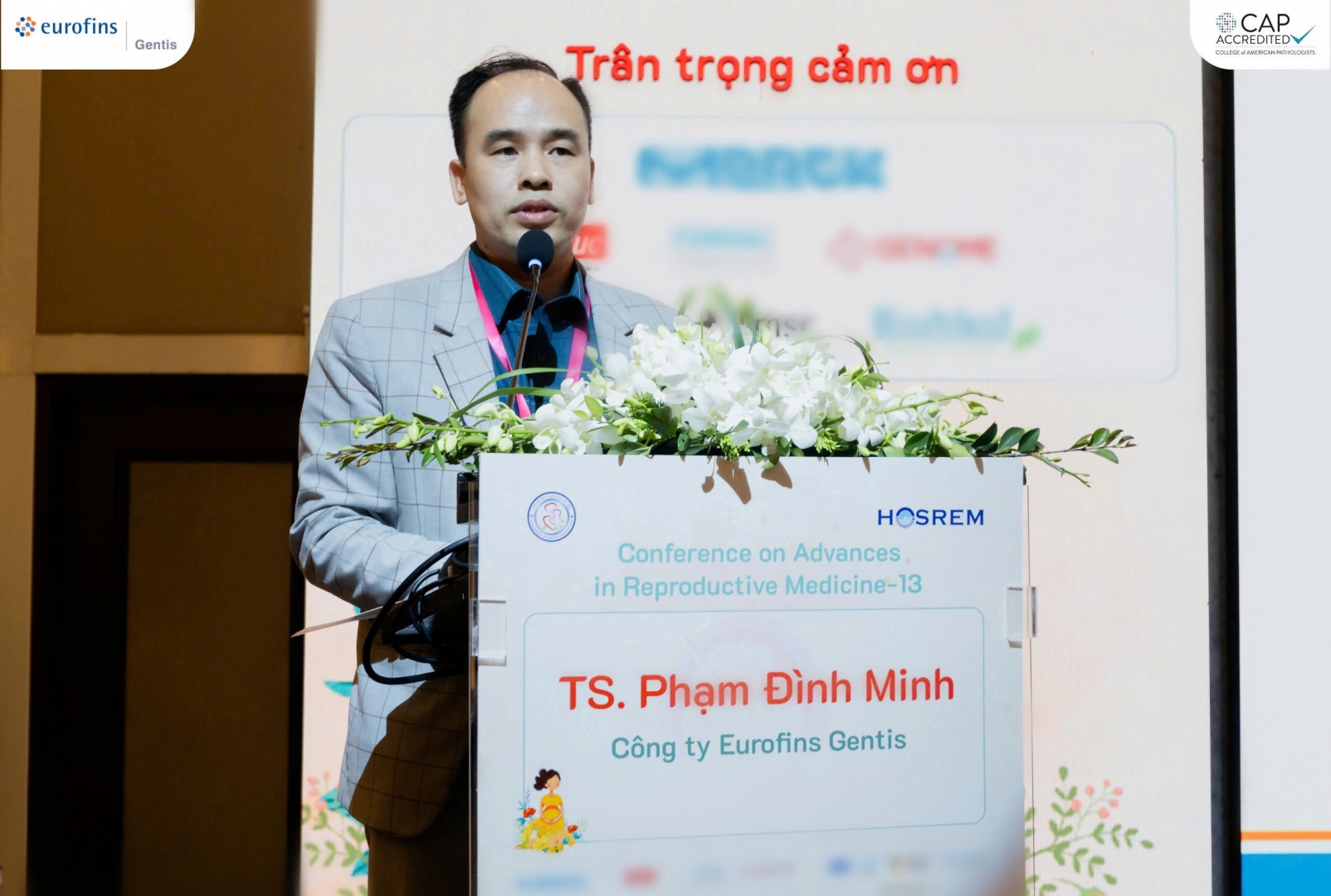
 Dr Pham Dinh Minh presented at the workshop “Advances in Reproductive Medicine 13” organized by the Hanoi Society for Reproductive Support
Causes of infertility
At the workshop “Advances in Reproductive Medicine 13”, Dr Pham Dinh Minh – R&D Director of Eurofins GENTIS – shared scientific insights on the role of genetic testing in reproductive support. According to him, the causes of infertility can be divided into three main groups.
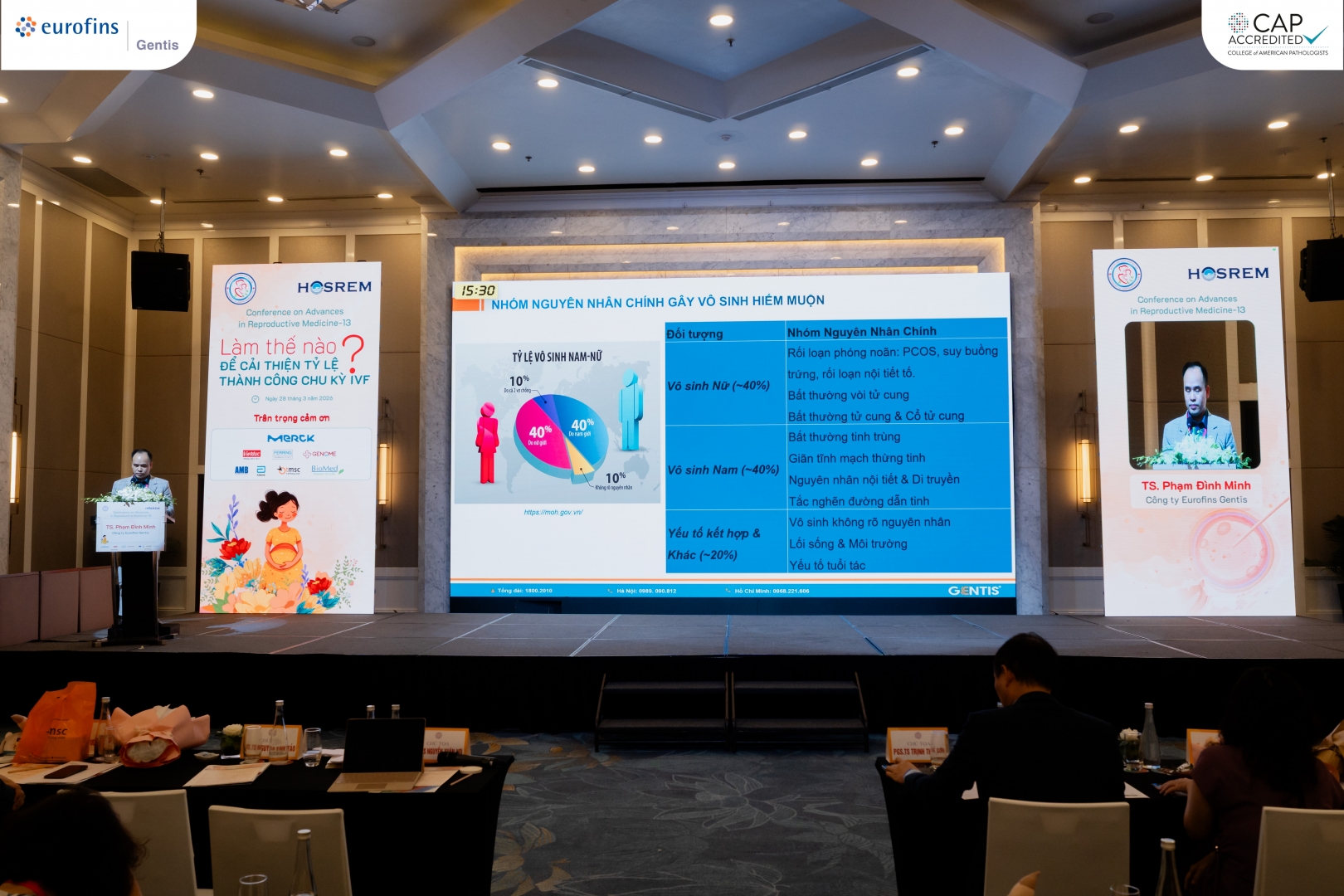 Dr Pham Dinh Minh shared the main groups of infertility causes
Female infertility (around 40%) is often associated with disorders in the female reproductive system such as ovulatory dysfunction (polycystic ovary syndrome – PCOS), premature ovarian insufficiency, hormonal imbalances, fallopian tube abnormalities, or uterine and cervical conditions.
Male infertility (around 40%) is mainly related to sperm quality and function, including abnormalities in sperm count or quality, varicocele, hormonal disorders, genetic causes, or obstruction of the reproductive tract.
The remaining 20% may involve combined factors such as unexplained infertility, lifestyle and environmental influences, or age-related factors. In many cases, multiple causes may coexist, making diagnosis and treatment more complex.
Factors affecting IVF success rates
In addition to identifying the causes of infertility, IVF success rates depend on multiple factors.
According to Dr Pham Dinh Minh, key factors include maternal age, embryo quality, uterine health, causes of infertility, lifestyle and psychological condition of the patient, ovarian stimulation protocols, and laboratory conditions. Among these, embryo quality and genetic factors are considered especially critical, as they directly affect implantation and fetal development.
“In many cases, embryos may carry genetic abnormalities that cannot be detected through morphological assessment alone. The application of genetic testing helps select healthy embryos, thereby improving IVF success rates and reducing miscarriage risk,” Dr Pham Dinh Minh shared.
Genetic testing helps identify causes and optimize IVF treatment
Depending on clinical findings, infertile patients should undergo genetic evaluation and appropriate testing. Importantly, all genetic analyses should be accompanied by counseling from clinical genetic specialists for both men and women, helping couples better understand their reproductive health status.
During fertility evaluation and treatment, several tests may be indicated to identify causes of infertility, including AZF, sperm DNA fragmentation, CFTR gene testing, karyotyping, thalassemia screening, AMH, HPV, STDs, FSHR gene, and NK cell testing. These tests provide a more comprehensive view of the patient’s reproductive health, enabling physicians to design personalized and effective treatment strategies.
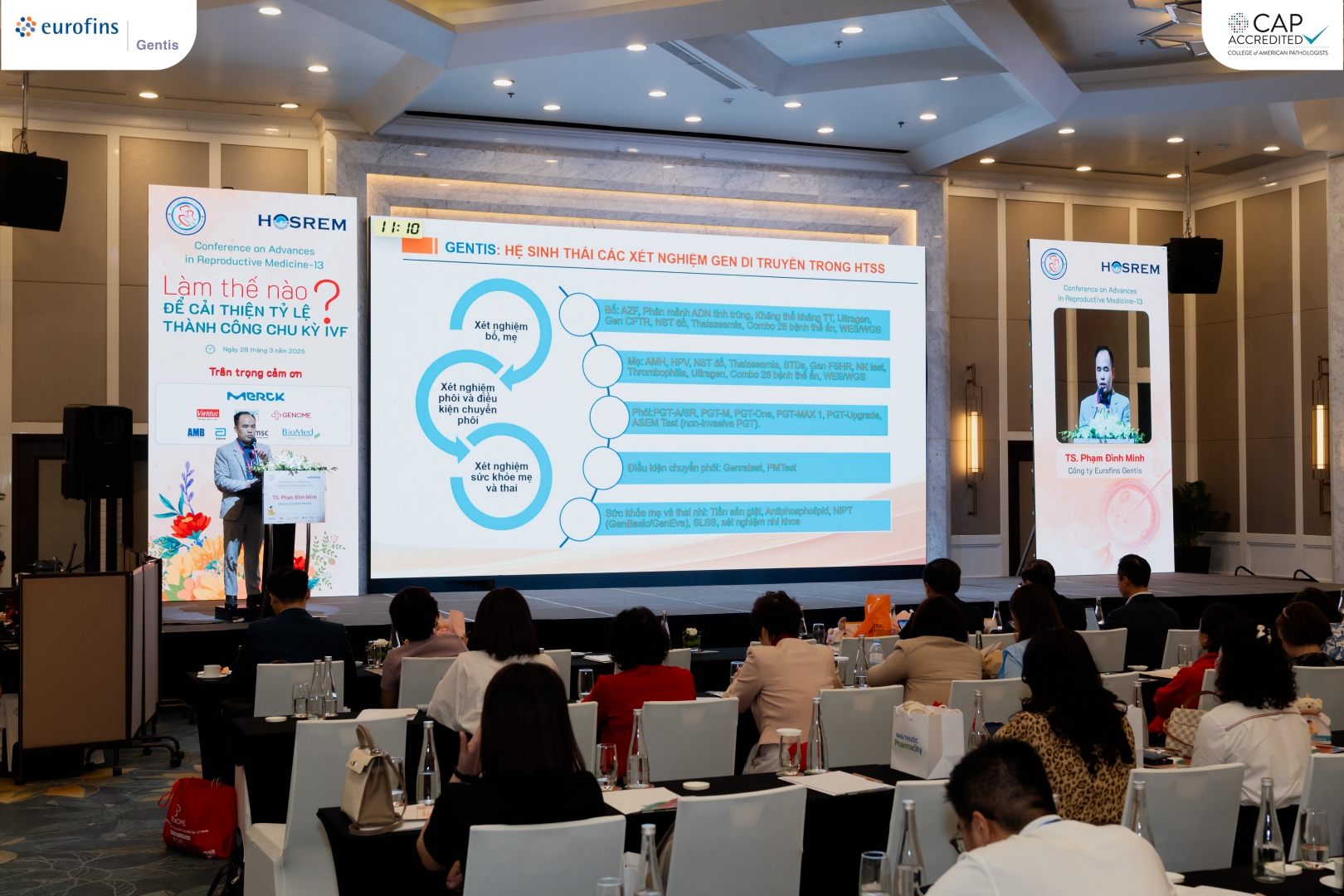 Dr Minh shared about the genetic testing ecosystem in reproductive support at Eurofins GENTIS
A major advancement in reproductive medicine is preimplantation genetic testing of embryos before transfer. Tests such as PGT-A/SR, PGT-M, PGT-One, PGT-MAX 1, and PGT-Upgrade allow detection of chromosomal abnormalities or single-gene disorders at the embryo stage. This enables clinicians to select embryos with the highest developmental potential, improving implantation rates, reducing miscarriage risk, and increasing the likelihood of a healthy birth.
In addition, new technologies such as ASEM test (non-invasive PGT) are being researched and applied to further optimize embryo selection in IVF.
Beyond infertility treatment, genetic testing also plays a key role in preventing hereditary diseases in future generations. Carrier screening tests, such as GEN28 (a panel screening 28 recessive disease genes), help identify the risk of couples carrying the same recessive genetic condition.
According to Dr Minh, preconception and premarital genetic screening enables couples to be more proactive in family planning, reduce the risk of having children with genetic disorders, and optimize assisted reproductive treatment when needed.
A comprehensive genetic testing ecosystem supporting IVF
To enhance the effectiveness of infertility treatment, Eurofins GENTIS has developed a comprehensive genetic testing ecosystem that supports couples throughout their reproductive journey. This ecosystem includes premarital and preconception screening, testing to identify causes of infertility, embryo genetic testing in IVF, prenatal screening, and newborn screening.
By integrating advanced testing technologies with specialized genetic counseling systems, these solutions help personalize treatment, support more accurate clinical decisions, and improve the success rates of IVF cycles.
In the context of rapid scientific and technological advancement, genetic testing is opening new opportunities for reproductive medicine. It not only improves infertility treatment outcomes but also brings hope for parenthood to many families while protecting the health of future generations.