
According to MSc. Dr. Nguyen Thi Thu (Deputy Director of the Hanoi Center for Infertility and Sexual Medicine, Hanoi General Hospital), PGT is playing an increasingly important role in the treatment of infertility.
"As a clinician in the field of assisted reproduction, I find PGT to be a very important test. The introduction of PGT allows doctors not only to assess the external morphology of embryos but also to 'see through' the genetic material inside. Thanks to this, we can select embryos that are both morphologically sound and genetically normal for transfer into the mother's uterus, increasing the chances of a healthy pregnancy and reducing the rate of miscarriage and stillbirth," Dr. Thu shared.
PGT - Not everyone needs it, but it's "key" for high-risk patient groups.
Although it offers many benefits, PGT is not a test for all IVF cases. Dr. Thu said that this technique is especially recommended for high-risk patient groups such as: a family history of genetic diseases, multiple miscarriages or stillbirths, repeated IVF failures, or women over 35 years old.
In these groups, the risk of chromosomal abnormalities in embryos is often higher than normal. Preimplantation genetic screening increases the chances of selecting healthy embryos, thereby improving treatment effectiveness and reducing psychological stress and costs for families.

MSc. Dr. Nguyen Thi Thu, PhD. Nguyen Quang Vinh and MSc. Dr. Vu Thu Huong shared information about new advances in PGT testing.
From PGT-A to the next generation of PGT technology
As a pioneer in the field of genetic testing in Vietnam, Eurofins GENTIS continuously updates its advanced PGT technologies to meet the growing needs of assisted reproductive centers and patients.
According to Dr. Nguyen Quang Vinh, General Director of Eurofins GENTIS, after more than 10 years of implementing PGT testing, the unit has observed that genetic abnormalities can appear on all chromosomes of the embryo.
"Abnormalities such as aneuploidy, chromosomal additions or deletions, mosaicism, balanced translocations, haploidy, or polyploidy can occur on any chromosome. Therefore, screening the entire chromosome set minimizes the risk of missing abnormalities compared to previous techniques that focused only on a few common chromosomes," Dr. Vinh said.
In addition to traditional tests such as PGT-A, PGT-SR, and PGT-M, Eurofins GENTIS has now implemented many new generation technologies such as PGT-Fast, PGT-Next, and PGT-Upgrade, offering more suitable options for different patient groups.
PGT-Fast: Shorter processing time, expanded opportunities for fresh embryo transfer.
One of the limitations of the previous PGT-A test was the often lengthy turnaround time for results, typically 3-5 days. This prevented many patients from undergoing embryo transfer within the same treatment cycle.
The advent of PGT-Fast has significantly addressed this issue. With the ability to deliver results in just about 15 hours, the technology helps IVF centers optimize treatment processes, while also opening up opportunities for fresh embryo transfer in suitable cases.
According to Dr. Thu, this is a very significant step forward for patients with special circumstances, such as those who need to save time and money or find it inconvenient to travel multiple times.
PGT-Next: More comprehensive genetic data mining
The trend toward individualized treatment is becoming a central focus of modern reproductive medicine. PGT-Next was developed to provide a more comprehensive picture of the embryo's genome.
In addition to detecting aneuploidy and chromosomal structural abnormalities, PGT-Next is also capable of identifying rarer abnormalities such as polyploidy or haploidy in embryos.
According to experts, this technology is particularly useful for difficult IVF cases, those with multiple treatment failures, or those with a limited number of embryos.
Dr. Thu stated that, in reality, some embryos show abnormalities during fertilization but still have the ability to correct themselves during development. With the support of PGT-Next, doctors have more grounds to reassess the genetic status of the embryo, confirming whether it is polyploid before making a decision on embryo transfer, thereby increasing the chances of successful treatment for patients.
PGT-Upgrade: Supporting families undergoing balanced transitions.
For couples carrying balanced chromosomal translocations, selecting a suitable embryo is always a major challenge.
PGT-Upgrade is considered a new breakthrough as it not only detects aneuploidy abnormalities or chromosomal deletions but also helps determine whether embryos carry balanced genetic translocations from their parents.
This is a crucial difference that conventional PGT-A or PGT-SR tests cannot achieve, giving doctors an additional tool to select more optimal embryos for future generations.
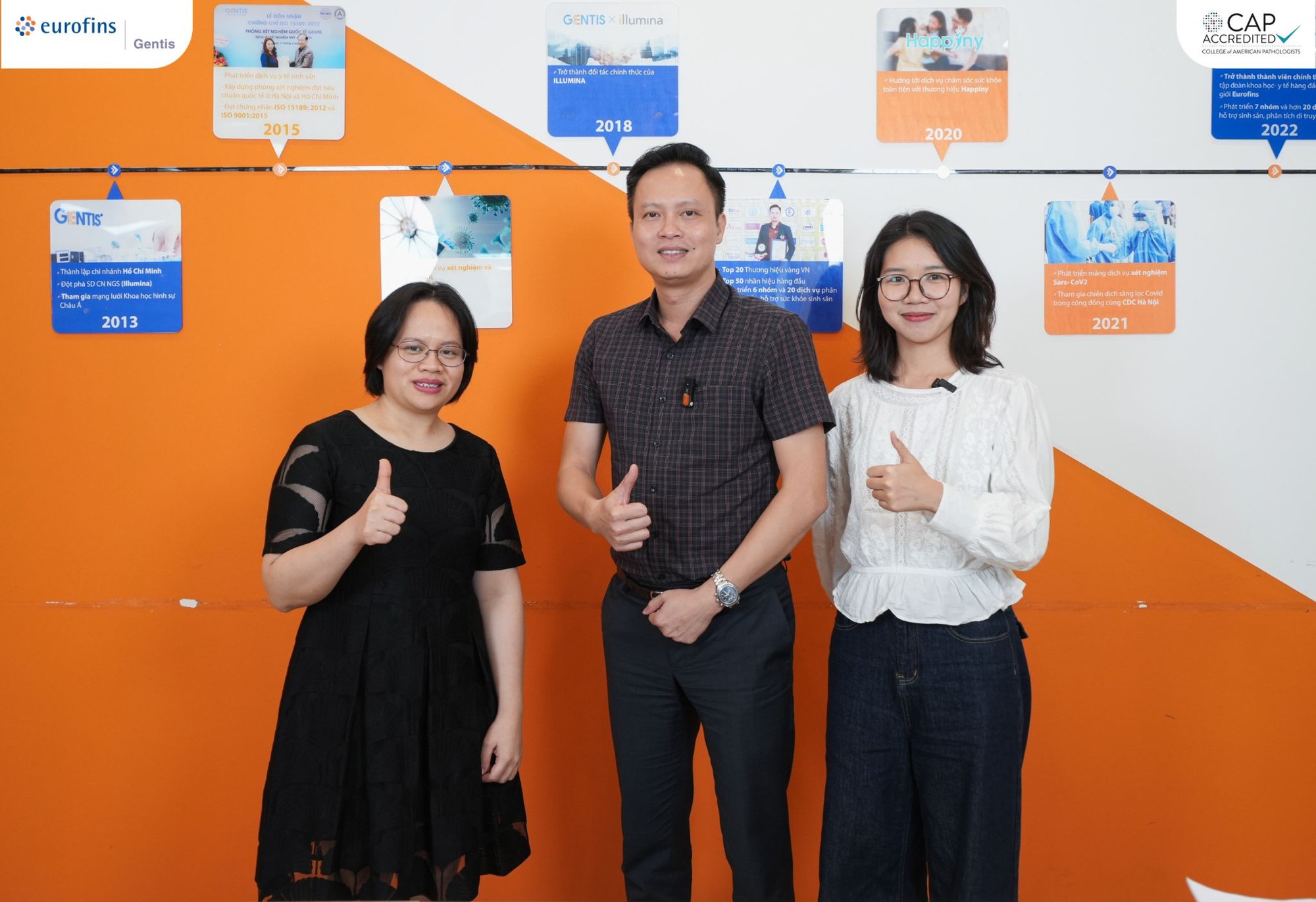
Three experts shared invaluable knowledge about PGT testing.
Genetic counseling - An indispensable link in the IVF journey.
According to MSc. Dr. Vu Thu Huong - Geneticist at Eurofins GENTIS, PGT is a tool to assist in selecting embryos with better genetic potential, but it cannot completely replace other factors affecting IVF outcomes such as hormones, immunity, uterine abnormalities, or other underlying medical conditions.
"PGT is not simply an additional test. It's a step that helps personalize IVF treatment. Most importantly, it's about selecting the right candidate, the right indication, and providing thorough counseling to the patient before, during, and after the test," Dr. Huong emphasized.
In particular, with complex results such as mosaic embryos or rare genetic abnormalities, the role of the geneticist becomes even more important in helping patients understand the meaning of the results and make the most appropriate decisions.
-370x207.jpg)