
-1366x0.jpg)

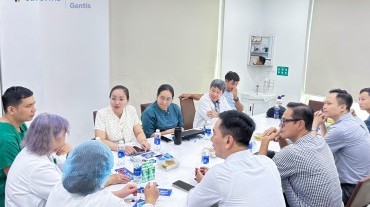
Dr. Do Thi Thi and Resident Dr. Vu Thu Huong (left to right)
IVF and Key Considerations During Pregnancy
According to Dr. Do Thi Thi from the Hanoi Infertility & Sexual Medicine Center at Hanoi General Hospital, women conceiving via IVF can certainly have healthy pregnancies. However, compared to natural conceptions, some IVF pregnancies may involve factors that increase the risk of gestational hypertension, preeclampsia, gestational diabetes, or preterm birth.
Maternal age is one common factor; women undergoing IVF tend to be older than those conceiving naturally. Additionally, underlying medical conditions associated with infertility, such as hypertension, metabolic disorders, diabetes, or polycystic ovary syndrome (PCOS) can contribute to an elevated risk.
Furthermore, IVF pregnancies carry a higher likelihood of multiple gestations in certain cases. Carrying twins or higher-order multiples is a significant risk factor for gestational hypertension and preeclampsia.
Therefore, not all IVF pregnancies carry the same level of risk. Doctors must conduct a comprehensive assessment based on maternal age, medical history, obstetric history, the number of fetuses, and the specific characteristics of the current pregnancy.

Dr. Dr. Do Thi Thi – Hanoi Infertility & Sexual Medicine Center, Hanoi General Hospital
Preeclampsia: A complication requiring early detection
"Preeclampsia is a multisystem, maternal disorder associated with pregnancy; it typically occurs after the 20th week of gestation and is characterized by symptoms such as hypertension and proteinuria, sometimes accompanied by edema. It is a serious obstetric complication, affecting approximately 2–8% of pregnant women," Dr. Thi explains.
If left undetected and unmanaged, preeclampsia in the mother can progress to eclampsia, HELLP syndrome, and neurological complications (such as cerebral hemorrhage or cerebral edema), cardiopulmonary complications (such as pulmonary edema or heart failure), or liver and kidney damage - potentially becoming life-threatening.
For the fetus, the condition increases the risk of intrauterine growth restriction (IUGR), preterm birth, fetal distress, or stillbirth.
Detection should not rely solely on symptoms
A challenge in preventing preeclampsia is that clinical signs may appear relatively late. Not every pregnant woman exhibits the full range of symptoms, yet placental damage may already be occurring before overt signs manifest.
Therefore, in addition to assessing medical history and risk factors, incorporating paraclinical markers can help provide a more comprehensive risk assessment.
 Dr. Vu Thu Huong – Geneticist at Eurofins GENTIS
"Measuring maternal uterine artery blood flow via Doppler ultrasound or monitoring PlGF levels provides insight into placental health." "These are indicators we can observe before the mother exhibits clinical signs of preeclampsia," Dr. Huong stated.
According to Ministry of Health guidelines, the high-risk group includes women with a history of preeclampsia (especially cases involving severe complications), multiple pregnancies, chronic hypertension, type 1 or 2 diabetes, chronic kidney disease, autoimmune diseases (such as systemic lupus erythematosus or antiphospholipid syndrome), hypercoagulable disorders, obesity (BMI > 35), use of assisted reproductive technologies, and elevated triglycerides during pregnancy.
Meanwhile, factors such as a first pregnancy, a family history of preeclampsia (mother or sister), maternal age over 40, socioeconomic factors (low standard of living), substance abuse, a history of delivering a low-birth-weight infant, adverse pregnancy outcomes, an inter-pregnancy interval exceeding 10 years, pregnancy-related infections, and gestational trophoblastic disease fall into the moderate-risk category.
Additionally, women with a history of uncomplicated, full-term deliveries are classified as moderate-risk. Identifying the risk group is crucial for doctors to determine appropriate preventive strategies and monitoring plans.
Early screening to create a risk profile for each expectant mother
Currently, the risk of preeclampsia can be assessed using various methods. Relying solely on clinical factors makes screening simple and feasible, but the false-positive rate may be higher compared to screening models that combine multiple indicators.
According to Dr. Huong, Eurofins Gentis employs a multi-factor screening model to assist doctors in early preeclampsia risk assessment. This model integrates various data points, including maternal characteristics and medical history, mean arterial pressure, uterine artery pulsatility index (measured via Doppler ultrasound), and markers related to placental health.
Instead of simply providing... Rather than offering a generalized assessment for all IVF pregnancies, a multifactorial model enables personalized risk evaluation, thereby assisting physicians in categorizing patients by risk level and determining their likelihood of developing preeclampsia during pregnancy.
The recommended time for early preeclampsia screening is the first trimester, specifically between 11 weeks and 13 weeks plus 6 days of gestation. This allows doctors to formulate a preventive plan before the 16-week mark if the expectant mother falls into a high-risk category requiring intervention. Ministry of Health guidelines also incorporate risk assessment at this 11-to-13-week-6-day window into the standard screening process.
In addition to first-trimester screening, risk assessment methods during the second and third trimesters may also be considered for certain expectant mothers, particularly if risk factors or warning signs arise.
High risk does not mean developing preeclampsia
It is crucial for expectant mothers to understand that a "high-risk" screening result is not synonymous with a diagnosis of preeclampsia.
Screening serves only to determine the level of risk (high or low), providing doctors with a basis for counseling and pregnancy management. If identified as high-risk, the expectant mother can receive closer monitoring and a tailored prevention strategy under the guidance of an obstetrician, IVF specialist, or other relevant medical expert.
"An IVF pregnancy can be perfectly healthy. The key is not to worry excessively simply because it is an IVF pregnancy, but rather to recognize it as a risk factor that warrants proactive screening and monitoring," Dr. Huong emphasized.
For IVF mothers, the journey of pregnancy often following significant effort to conceive calls for a proactive care plan. Accurately understanding risks, screening at the right time, and personalizing care for each mother are vital steps in the early detection of preeclampsia risk. This enables doctors to implement appropriate prevention and management strategies, ensuring a safe pregnancy for both mother and baby.








Để lại bình luận
0 Bình luận