

For couples at risk of having a child affected by Thalassemia, genetic counseling before pregnancy helps accurately determine the parents' genotypes, assess the risk to the fetus, and consider appropriate reproductive options. IVF combined with Preimplantation Genetic Testing for Monogenic Disorders (PGT-M) provides an additional option for families seeking to proactively reduce the risk of transmitting the disease to the next generation.
Thalassemia is primarily inherited in an autosomal recessive manner. Individuals carrying a single disease-causing variant usually do not have the corresponding clinical form of the disease or may have only mild hematological manifestations, but they can still pass the variant on to their children. However, the risk of having an affected child cannot be determined solely from the fact that “both the father and mother carry Thalassemia-related variants.” It is necessary to determine specifically which gene is affected and the type of variant carried by each individual.
For example, in α-thalassemia, risk assessment is more complex because the α-globin genes include HBA1 and HBA2, and variants may affect one or more copies of these genes. The affected copies may also be located on the same chromosome or on two different chromosomes. For instance, when both parents have the genotype --/αα, the fetus has a 25% risk of having the --/-- genotype, which can cause Hb Bart syndrome (hydrops fetalis), a 50% chance of having α-thalassemia trait, and a 25% chance of not carrying the disease-causing variants. This illustrates that the 25% figure is meaningful only when the genotypes of both parents have been clearly determined.

“During pregnancy, we may encounter conditions such as fetal hydrops, stillbirth, or a child being born with Thalassemia, depending on the specific genotype. In severe forms of the disease, children may require regular blood transfusions and long-term treatment, which can significantly affect their health and quality of life,” said Specialist Level I Physician Ho Van Thang, Director of the Assisted Reproductive Technology Center at Bao Son General Hospital.
Therefore, identifying carrier status before pregnancy is important. Through genetic testing, genetic counseling, and assessment of both partners' genotypes, the risk to the child can be determined more specifically, providing families with a basis for considering available reproductive options.
Proactively Reducing Disease Risk Before Embryo Transfer into the Uterus
For couples at risk of having a child affected by Thalassemia, one option that may be considered is IVF combined with PGT-M.
PGT-M (Preimplantation Genetic Testing for Monogenic Disorders) is a preimplantation genetic test used to assess the genetic status of embryos for a specific monogenic disorder or previously identified genetic variant.
During the IVF process, after embryo creation and trophectoderm biopsy, genetic material is analyzed to determine whether the embryo carries the family-specific variants associated with the disease. PGT-M results may support physicians and families in selecting embryos that are not affected by the genetic disorder being tested for, in accordance with each family's reproductive goals.
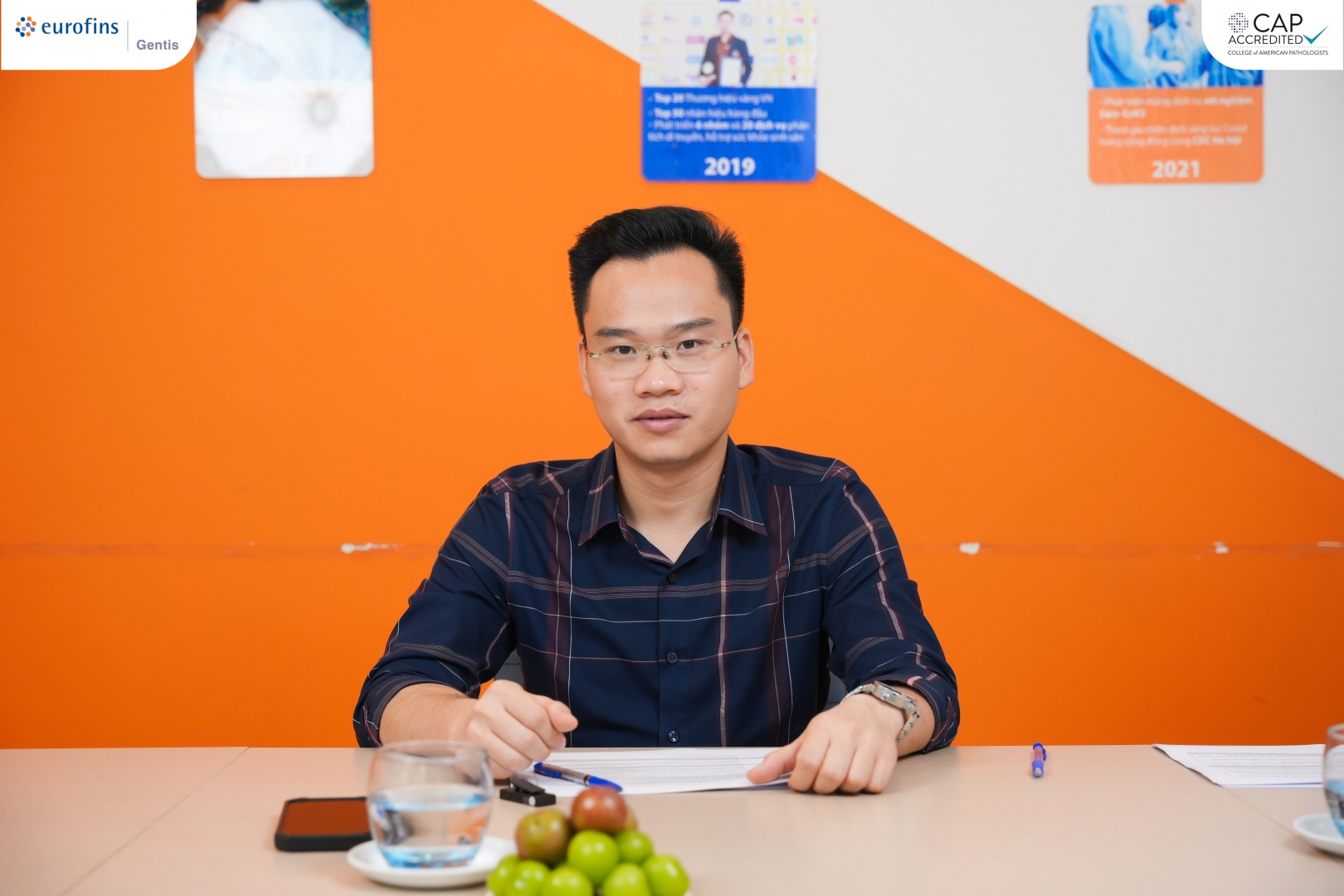
“For cases in which both parents carry variants associated with Thalassemia, once the genotypes of both partners have been accurately determined, the family can receive counseling on options such as prenatal diagnosis or IVF combined with PGT-M. When PGT-M is performed, the test results may help identify embryos that are not affected by the disease associated with the family-specific variants being assessed, thereby supporting embryo selection for transfer,” said Dr. Thang.
However, experts note that PGT-M is not a test that can be applied in the same way to every case. Before undergoing PGT-M, the family should undergo an assessment of its specific genetic status, particularly accurate identification of the variants carried by the father and mother.
For α-thalassemia in particular, fully characterizing the status of HBA1/HBA2 and the configuration of the variants is important for assessing reproductive risk. For β-thalassemia, the disease-causing variants in the HBB gene of each individual should be identified. Once the family-specific variants have been determined, preimplantation genetic testing and prenatal diagnosis may be considered in appropriate families.

MSc., Resident Physician in Genetics Vu Thu Huong, Geneticist at Eurofins GENTIS, explained that although they are all classified as Thalassemia, different genetic variants can produce different clinical manifestations when combined. Even among families with similar genotypes, clinical manifestations may not be exactly the same between family members. In particular, disease names or a “carrier” result alone should not be used to predict the condition of the fetus.
“Therefore, we need to know exactly what the specific variant is, which gene it is located in, and how the genotypes of the two partners are combined. Only then can we assess the risk to the child and provide counseling on appropriate options,” said MSc., Resident Physician in Genetics Vu Thu Huong.
According to Dr. Huong, the feasibility of PGT-M and the appropriate testing strategy also depend on the parents' genotypes, family history, reproductive history, and the family's goals. Genetic counseling before testing therefore plays an important role in determining genetic risk and selecting an appropriate approach.
Genetic Technology to Support Appropriate Embryo Selection
With the development of reproductive medicine, preimplantation genetic testing has increasingly become an important consideration for families at risk of monogenic genetic disorders.
At Eurofins GENTIS, in addition to Thalassemia, PGT-M can be performed for most monogenic disorders. The test is designed based on the specific genetic characteristics of each family. Depending on the disease and variant involved, the testing strategy may combine analysis of the disease-causing variant with linked genetic markers to improve the reliability of determining the genetic origin of the embryo.
For Thalassemia, this is particularly important because the same disease name may be associated with many different genetic variants. Therefore, the purpose of PGT-M is not simply to “find the Thalassemia gene,” but to determine the genetic status of the embryo with respect to the identified family-specific variants and the corresponding genetic disorder.
In addition to testing technology, genetic counseling plays a role throughout the process. Patients should receive information about the inheritance mechanism, the risk to their children, the capabilities and limitations of PGT-M, the implications of different result categories, and other reproductive options that may be considered.
In particular, PGT-M does not completely replace pregnancy monitoring and appropriate prenatal screening or diagnostic testing. PGT-M results should be interpreted in the context of the testing methodology and the specific genetic characteristics of each family.
Understanding Genetic Risk to Make Informed Choices
An important characteristic of Thalassemia is that individuals carrying disease-causing variants often have no obvious clinical manifestations. A person who is completely healthy clinically may still carry a genetic variant and pass it on to their child. Therefore, proactive carrier screening before marriage or before pregnancy may help couples identify potential risks at an earlier stage.
In particular, for families with a known history of Thalassemia or in which the parents have been identified as carriers of disease-causing variants, genetic counseling can help clarify the risk and provide information on options appropriate to their specific circumstances.
“It can be seen that genetic disorders and IVF are closely connected. This is also one of the important objectives of assisted reproduction,” said Specialist Level I Physician Ho Van Thang.
From a professional perspective, when individuals learn that they carry a disease-causing variant, the important step is not to become overwhelmed but to proactively seek information and appropriate counseling. For families at risk of monogenic disorders such as Thalassemia, IVF combined with PGT-M may be one of the options considered to proactively assess embryos before transfer, with the aim of reducing the risk of having a child affected by a genetic disorder.
Each family has different genetic characteristics, medical history, and health conditions. Therefore, decisions regarding genetic testing or assisted reproductive options should be made based on individualized professional assessment and counseling. In the journey toward having a child, identifying genetic risks at an early stage may give couples more time and options to prepare for the future.







Để lại bình luận
0 Bình luận