AI and omics data – The foundation of precision medicine
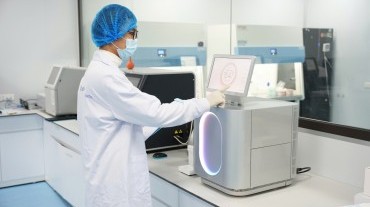
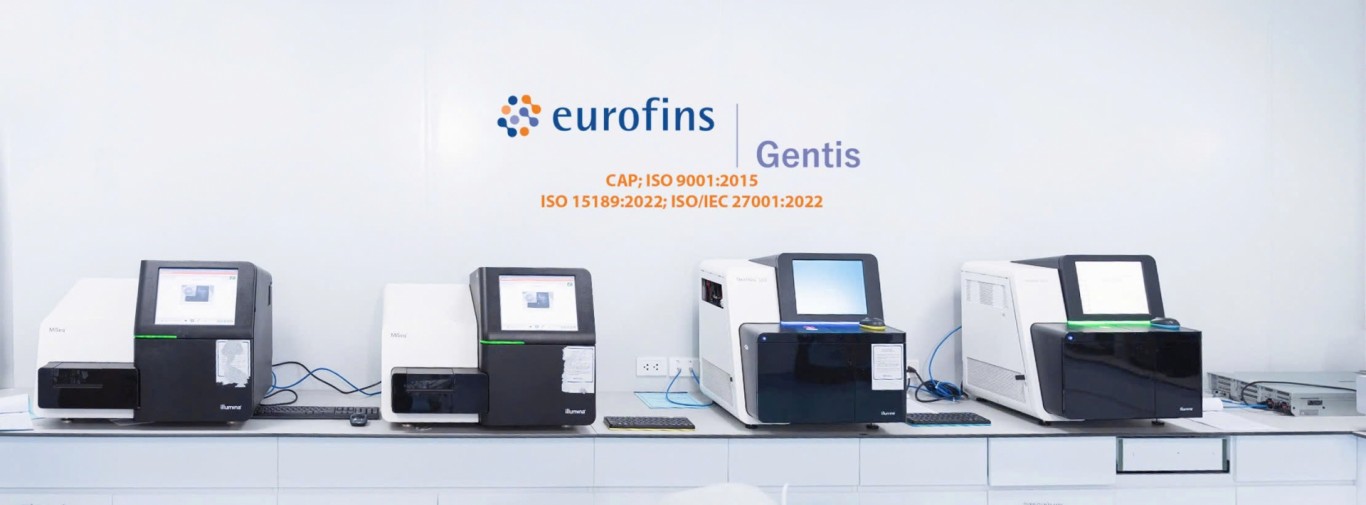
The rapid development of next-generation sequencing (NGS), mass spectrometry technologies, along with the increasing capacity for collecting and storing large-scale clinical data, has generated an enormous volume of information in medical genetics. Omics data—including genomics, transcriptomics, proteomics (proteins and post-translational modifications), metabolomics (metabolites and hormones), together with bioinformatics and AI—provide a comprehensive reflection of biological characteristics at the molecular level. However, analyzing and effectively exploiting these datasets poses a major challenge if relying solely on traditional methods.
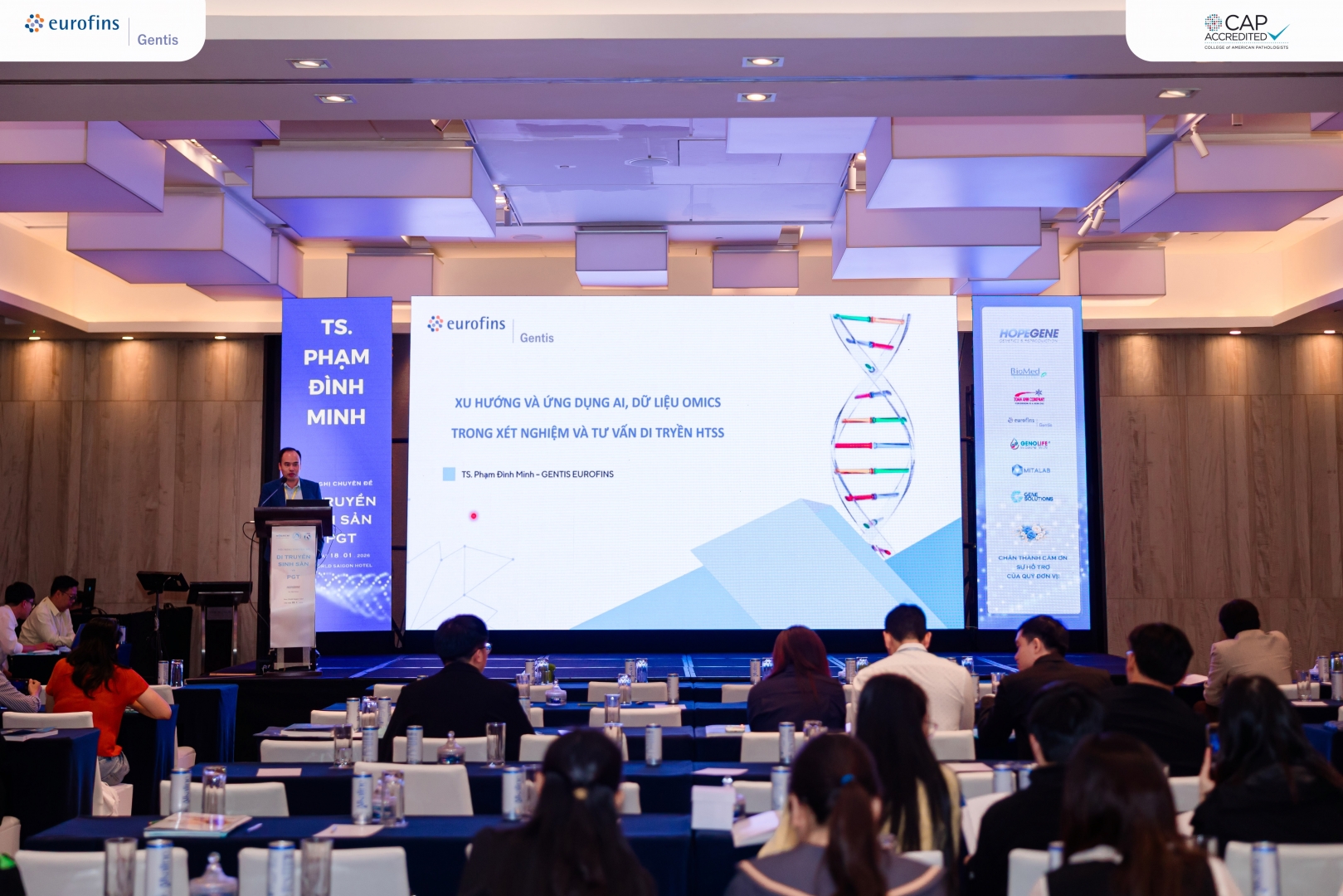 Dr. Pham Dinh Minh (R&D Director, Eurofins GENTIS) presenting at the Symposium on Reproductive Genetics and PGT
With its machine learning capabilities and multidimensional data analysis, AI enables rapid and accurate processing of complex Omics datasets, thereby uncovering potential relationships among genetic factors, clinical data, and disease risks. In assisted reproduction, this opens up opportunities to improve embryo screening quality, predict implantation potential, and provide more scientific and personalized genetic risk counseling for couples.
Eurofins GENTIS pioneers the application of AI in reproductive genetics
According to Dr. Pham Dinh Minh (R&D Director of Eurofins GENTIS) at the Symposium on Reproductive Genetics and PGT, in recent years Eurofins GENTIS has focused on developing information technology platforms and AI applications integrated with Omics data to support genetic screening, counseling, and management of hereditary diseases. These solutions not only provide professional support for hospitals and partners but also strengthen the connection between Eurofins GENTIS, clinicians, healthcare facilities, and patients, contributing to improved user experience and healthcare service quality.
In the field of genetic analysis, Eurofins GENTIS has been researching and developing various bioinformatics tools to support the application of AI in studying the molecular mechanisms of fertilization, embryo development, and factors affecting infertility and subfertility. These studies aim to improve the success rates of in vitro fertilization (IVF) and to personalize treatment for each patient in the future.
PGT-AI – A new approach to embryo selection
One of the greatest challenges in IVF today is how to increase pregnancy rates and the likelihood of delivering healthy babies after embryo transfer. According to Dr. Pham Dinh Minh, the embryo is the decisive factor determining the success of an IVF cycle. Selecting the best embryo not only affects implantation rates but also has long-term implications for the child’s future health.
In this context, the application of artificial intelligence in preimplantation genetic testing (PGT-AI) is considered a highly promising trend. PGT-AI goes beyond the assessment of chromosomal abnormalities in embryos and aims to select the “best embryo among good embryos” from a genetic perspective.
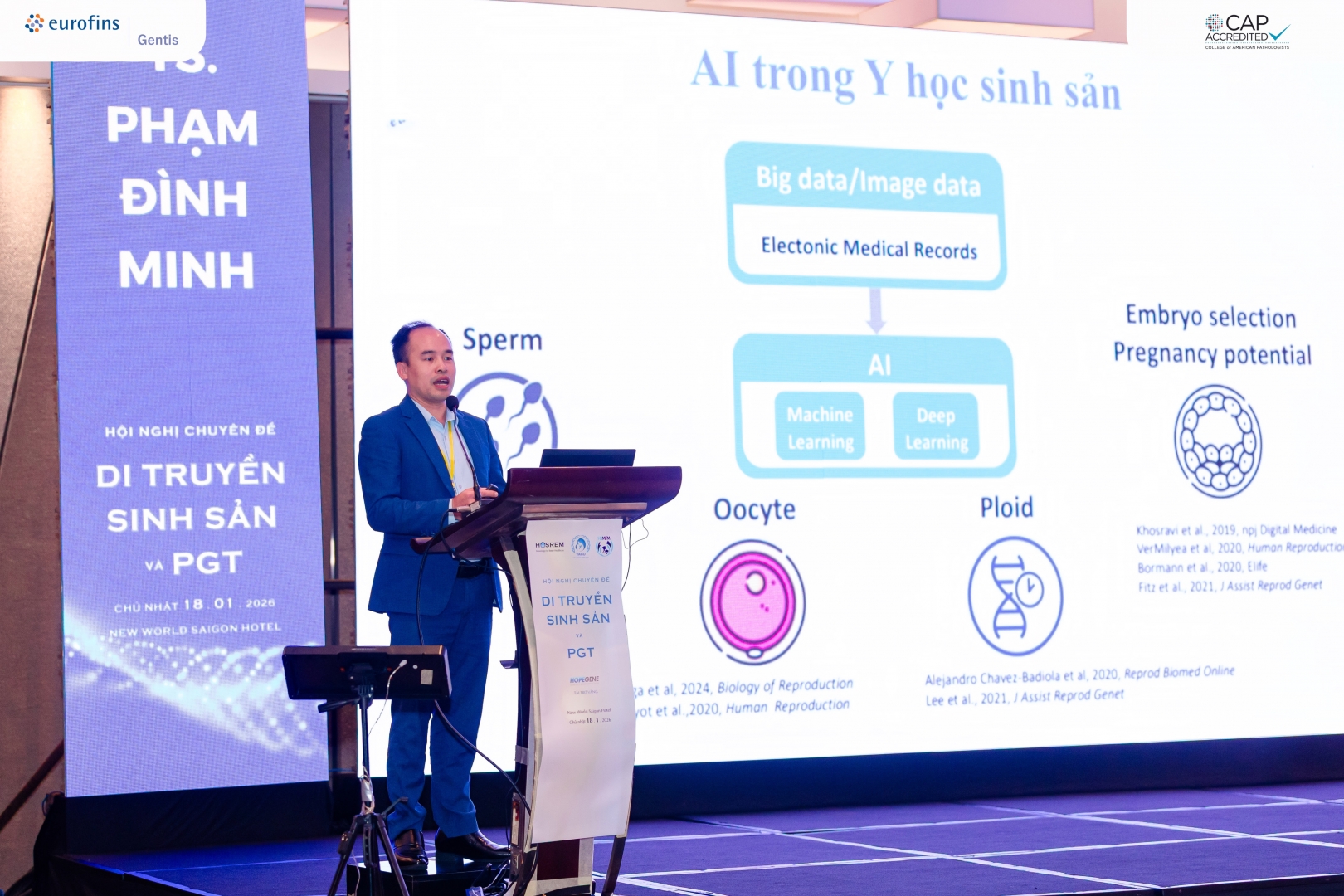
Eurofins GENTIS Is researching the application of AI to predict embryo transfer success
Currently, Eurofins GENTIS is conducting pilot studies on applying AI to predict the success potential of embryo transfer. By analyzing the genetic data of embryos in combination with maternal clinical factors, AI can help identify relationships between embryos and their compatibility with the uterine environment. This enables clinicians to make optimal embryo selection decisions, thereby improving implantation rates and overall IVF success.
By integrating maternal clinical data and expanding the analysis of embryonic genetic data within PGT-AI, the research team at Eurofins GENTIS is developing screening and predictive models to identify healthy embryos with high implantation potential. This is regarded as an important step toward personalized counseling and assisted reproductive treatment.
Applications of AI in NIPT and newborn screening
In addition to IVF and PGT-AI, AI is also being strongly applied by Eurofins GENTIS in the fields of prenatal and newborn screening. In non-invasive prenatal testing (NIPT), Eurofins GENTIS collaborates with the University of Engineering and Technology – Vietnam National University, Hanoi, to develop bioinformatics algorithms that expand the detection spectrum of genetic variants. As a result, the sensitivity, accuracy, and specificity of NIPT have been significantly improved, contributing to higher-quality fetal anomaly screening.
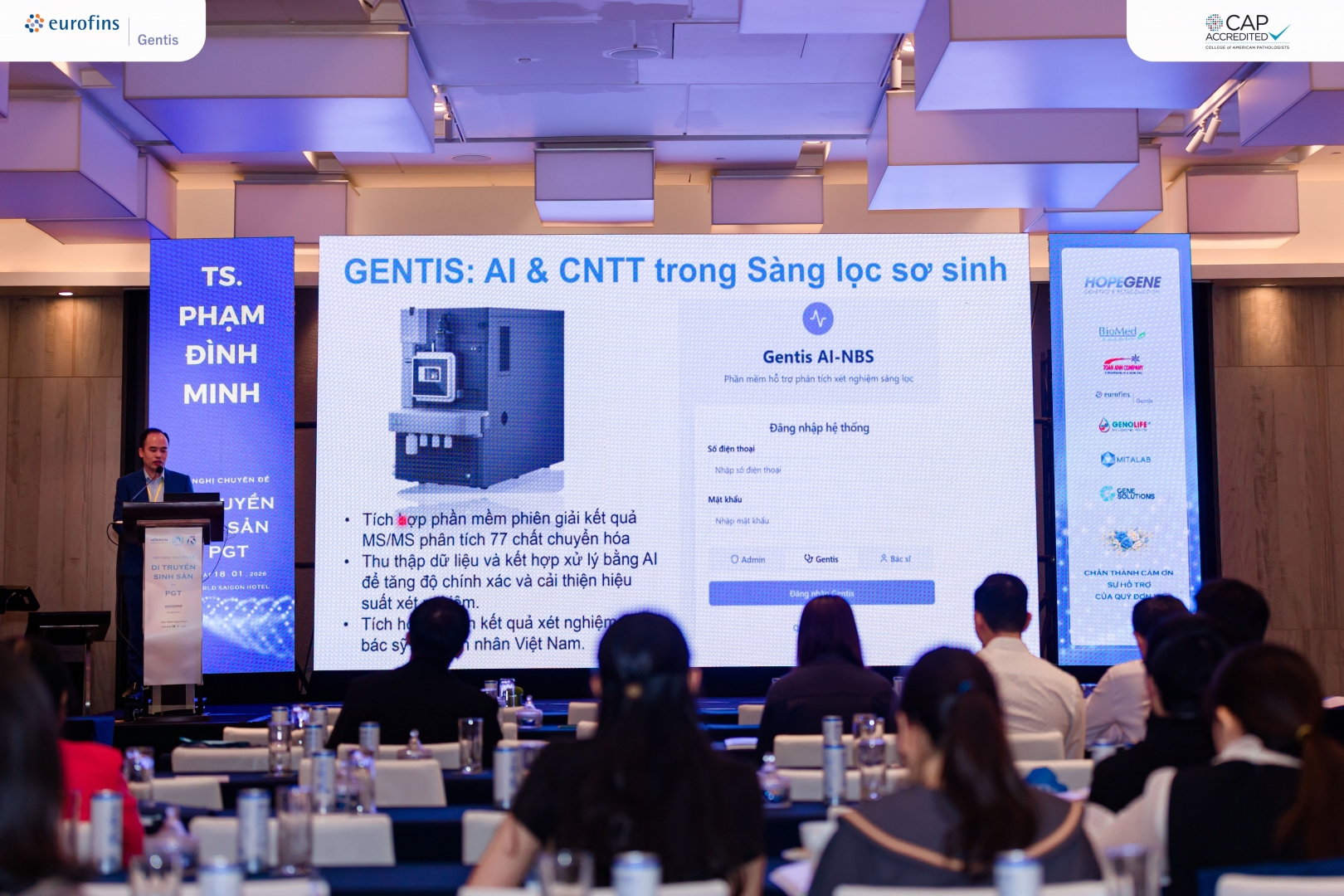 Eurofins GENTIS Is researching and applying AI and Information technology in newborn screening
For newborn screening, Eurofins GENTIS is developing AI-integrated software solutions to enhance the detection of complex metabolic disorders based on mass spectrometry data. From these datasets, algorithms are built to support rapid and accurate early prediction and diagnosis of genetic diseases related to metabolic disorders in newborns.
Notably, in the process of reporting results, Eurofins GENTIS has integrated information technology and AI to interpret testing data, helping clinicians and families more easily access disease-related information, understand risks, and determine appropriate treatment directions for infants.
The application of AI and Omics data in genetic testing and counseling is ushering in a new era for assisted reproduction and precision medicine. With ongoing research and real-world applications, Eurofins GENTIS demonstrates its pioneering role in bringing advanced technologies into reproductive healthcare services in Vietnam.
In the future, as datasets become more comprehensive and AI algorithms more refined, AI-based genetic solutions are expected to support clinicians in making more accurate decisions, optimizing treatment outcomes, creating opportunities for parenthood for many infertile couples, and contributing to sustainable improvements in population health.