

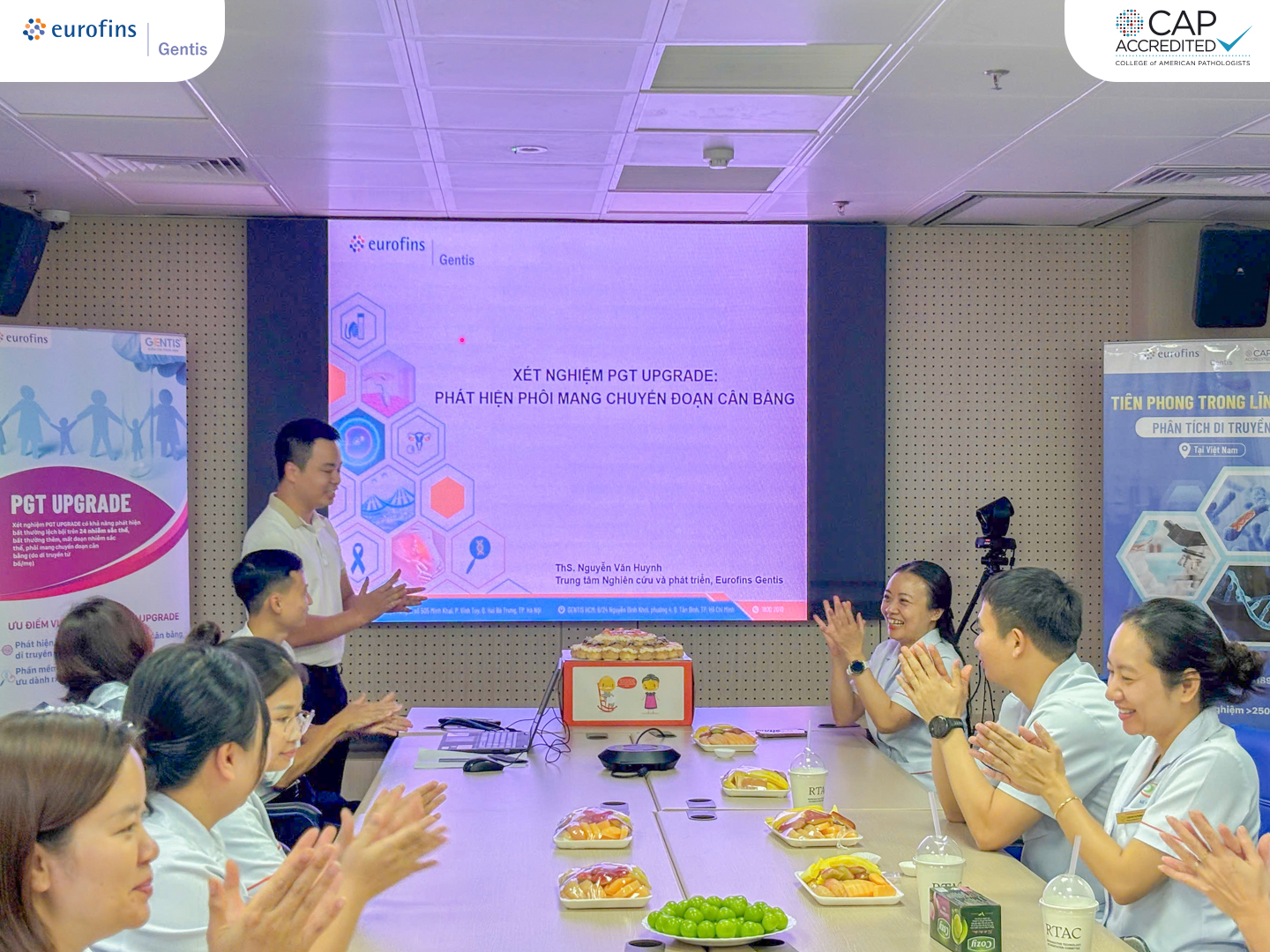
The scientific session was attended by representatives of Eurofins GENTIS and the professional team of Hanoi Andrology and Fertility Hospital. Representing Eurofins GENTIS were MSc. Nguyen Van Huynh from the Research & Development (R&D) Center and MSc., Resident Physician in Genetics Vu Thu Huong.
Representing Andrology and Fertility Hospital of Hanoi were MSc., MD Le Thi Thu Hien – Medical Director; Dr. Pham Van Huong, Specialist Level I – Deputy Medical Director; PhD, MD Bui Thi Phuong Hoa – Head of the Department of Scientific Research and Training; MSc., MD Dinh Huu Viet – Head of the Department of Andrology; Dr. Nguyen Thanh Trung, Specialist Level I – Head of the Department of Medical Examination; MSc., MD Duong Thi Hien Luong – Deputy Head of the Department of Medical Examination; together with physicians and healthcare professionals from the hospital.
PGT-UPGRADE: Detecting Embryos Carrying Balanced Translocations
PGT-UPGRADE is a preimplantation genetic testing solution capable of analyzing: numerical abnormalities across all 24 chromosomes; structural chromosomal abnormalities, including microdeletions and duplications larger than 5 Mb; mosaicism (30%–70%); and embryos carrying balanced translocations inherited from either the father or mother.
A key distinguishing feature of PGT-UPGRADE is its ability to identify embryos carrying balanced translocations, providing additional genetic information beyond the assessment of chromosomal numerical and structural abnormalities.
In particular, for couples who have been identified as carriers of a balanced translocation, this information can support physicians and patients in classifying embryos according to their genetic status and making informed decisions regarding embryo selection prior to transfer.
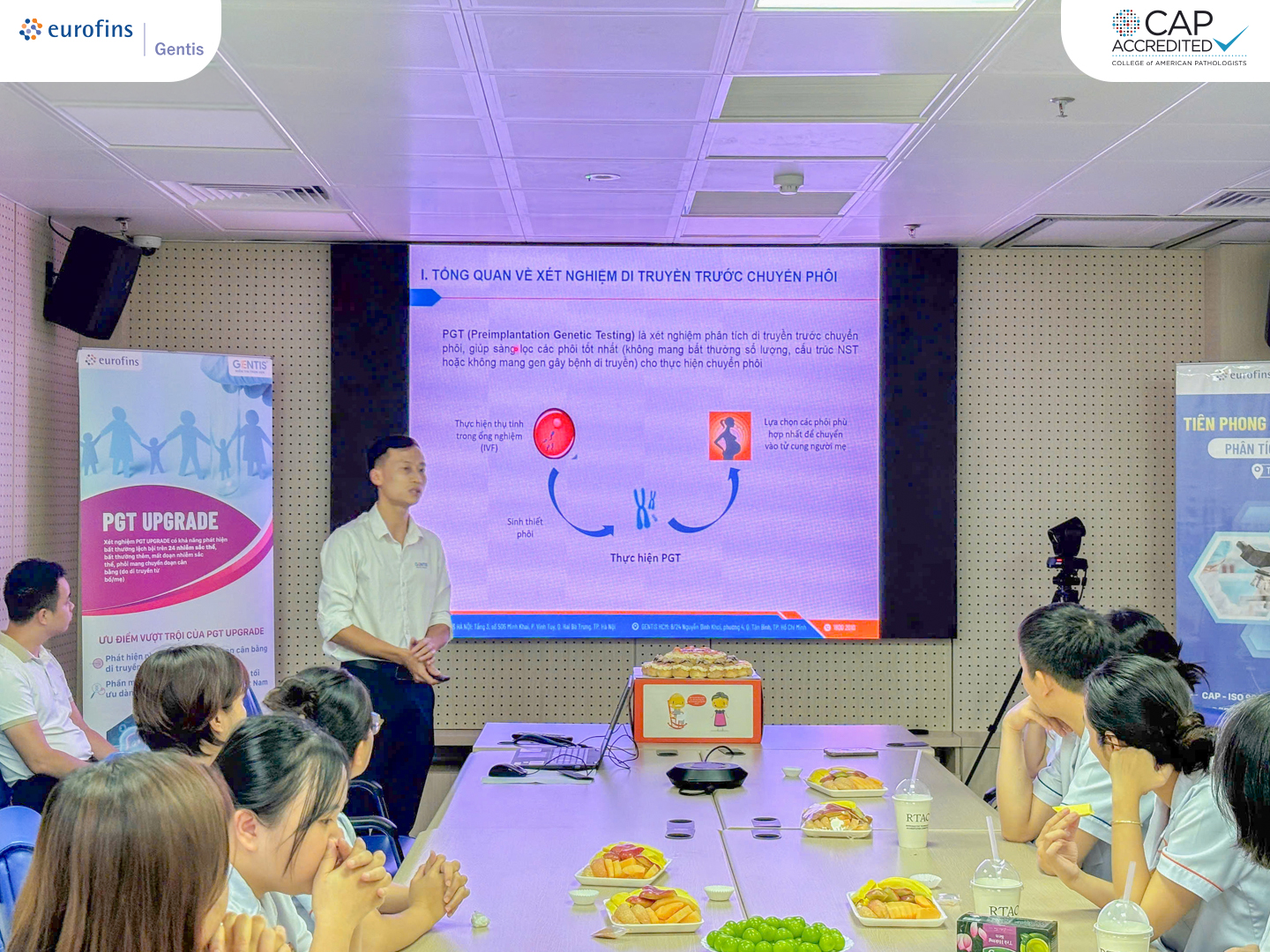
A balanced translocation is a type of structural chromosomal rearrangement in which a segment of DNA is exchanged between non-homologous chromosomes without, in general, a net loss or gain of genetic material at the breakpoints.
In assisted reproduction, individuals carrying a balanced translocation may have an increased risk of producing embryos with chromosomal abnormalities, which may contribute to an increased risk of miscarriage or a pregnancy affected by a chromosomal abnormality. Therefore, identifying a balanced translocation in either parent and assessing the chromosomal status of embryos can provide valuable information for genetic counseling and embryo selection prior to transfer.
NGS Technology in PGT-UPGRADE Testing
PGT-UPGRADE is performed using Next-Generation Sequencing (NGS) technology, utilizing an Illumina sequencing system combined with specialized bioinformatics analysis software.
The sample requirements for PGT-UPGRADE include:
- Parental samples and, where available, a sample from a shared child (2–3 mL of whole blood collected in a sodium heparin tube), together with a karyotype report confirming the presence of a balanced translocation.
- Day-5 embryo biopsy samples, with a minimum of four embryos recommended to increase the likelihood of obtaining an embryo carrying a translocation-related abnormality for use as a reference.
The use of parental samples together with the results of chromosomal testing confirming the balanced translocation provides an important reference framework for embryo analysis.
Cases in Which PGT-UPGRADE May Be Considered
PGT-UPGRADE may be particularly relevant in cases involving a risk of chromosomal abnormalities, including:
- Either the wife or husband has been identified as a carrier of a balanced translocation and does not wish to pass the translocation on to the next generation.
- Women over 35 years of age.
- A history of repeated implantation failure.
- Male infertility or severe male factor infertility.
- Couples with a history of recurrent pregnancy loss.
- A family history of chromosomal abnormalities.
However, PGT indications should be individualized. Fertility specialists and genetic specialists should assess the couple’s genetic background, reproductive history, chromosomal test results, and embryo characteristics before determining the appropriate testing strategy.
Providing Additional Genetic Information for Embryo Selection
In IVF, embryo morphology does not fully reflect the embryo’s genetic status. For families with structural chromosomal abnormalities, particularly balanced translocations, morphological assessment alone may not provide all the information required for embryo selection.
PGT-UPGRADE provides an additional layer of genetic information, helping identify embryos with chromosomal numerical abnormalities, structural abnormalities above the test’s detection threshold, and, importantly, embryos carrying a balanced translocation inherited from either the father or mother.
The test results can therefore support clinicians and patients in embryo classification, genetic counseling, and embryo selection prior to transfer, with the aim of reducing the risk of transmitting chromosomal abnormalities associated with balanced translocations to the next generation.
Strengthening Professional Collaboration in Assisted Reproduction
The scientific session at Andrology and Fertility Hospital of Hanoi provided an opportunity for Eurofins GENTIS to share the latest advances in preimplantation genetic testing and to engage directly with physicians regarding the potential clinical application of PGT-UPGRADE.
Andrology and Fertility Hospital of Hanoi has a multidisciplinary team working across areas related to assisted reproduction, embryology, and genetics. Strengthening collaboration between genetic testing laboratories and assisted reproductive centers can help bring advanced genetic analysis techniques closer to clinical practice while providing additional scientific information to support genetic counseling and individualized treatment strategies for infertility.
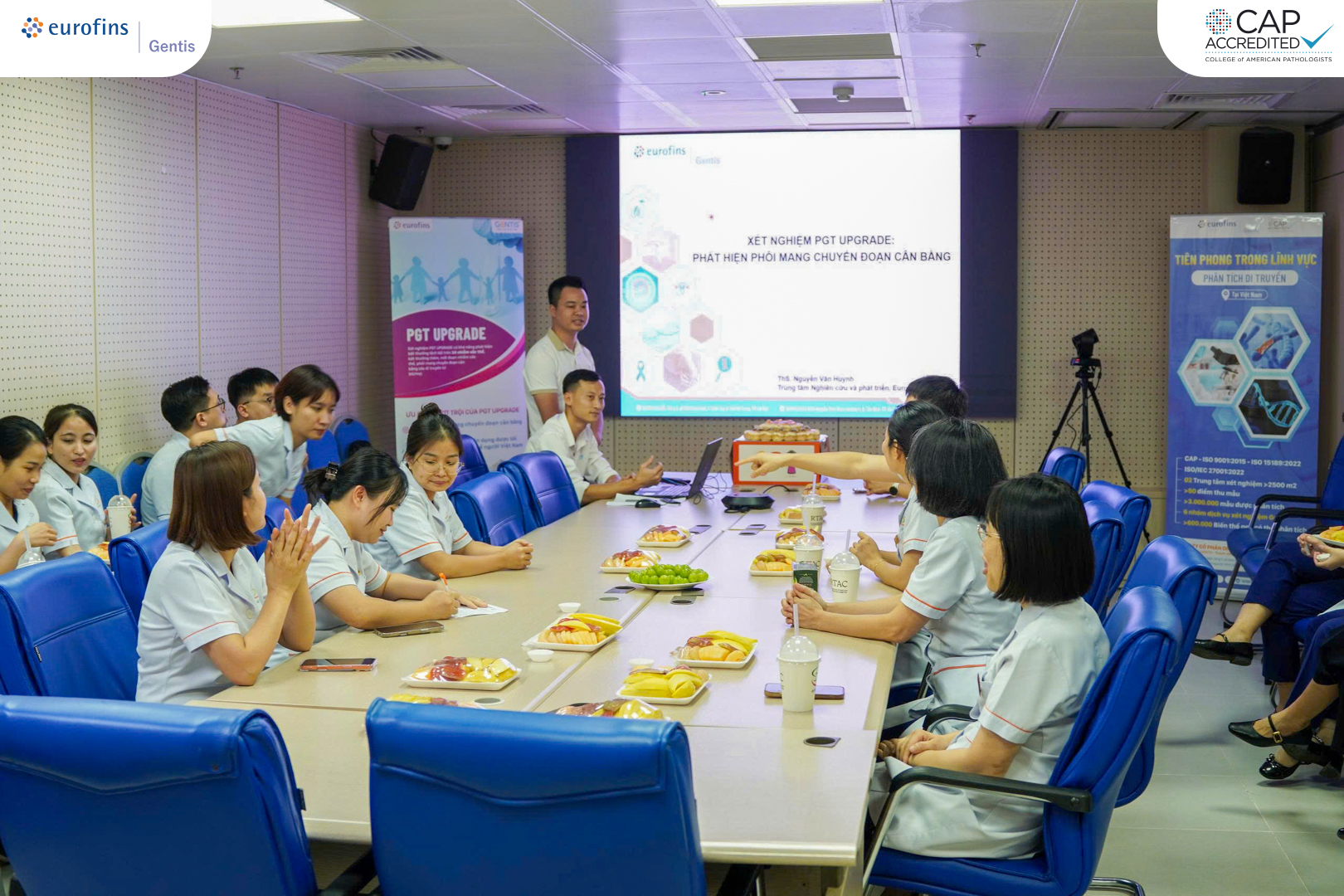
Eurofins GENTIS will continue to invest in sequencing technologies, bioinformatics analysis systems, and professional expertise to develop advanced genetic testing solutions, including PGT-UPGRADE, supporting physicians and patients in making appropriate decisions throughout their assisted reproductive treatment journey.









Để lại bình luận
0 Bình luận