
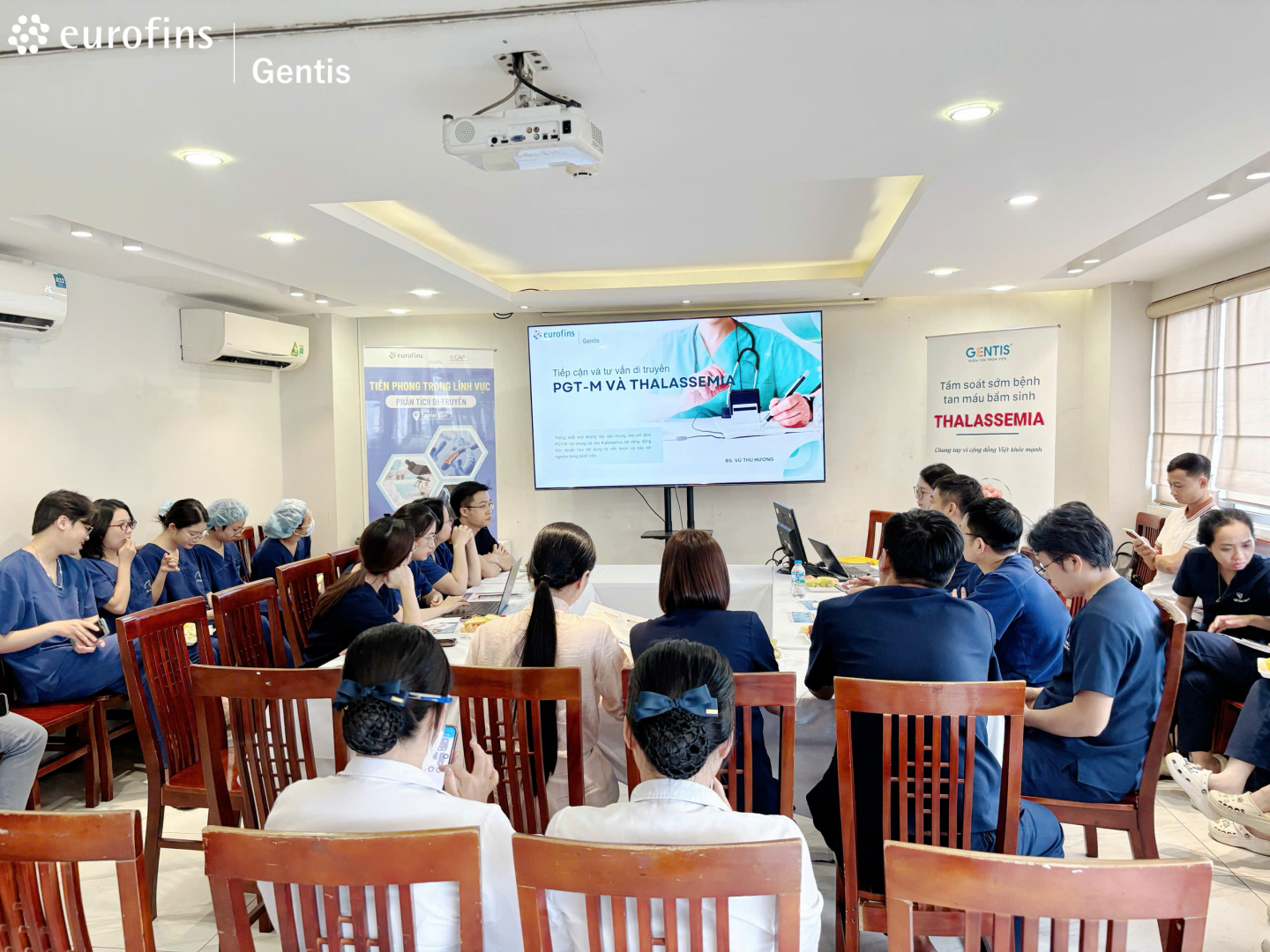
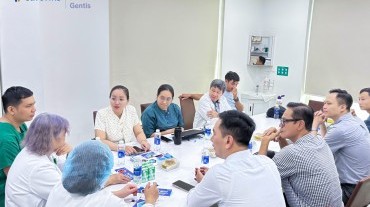
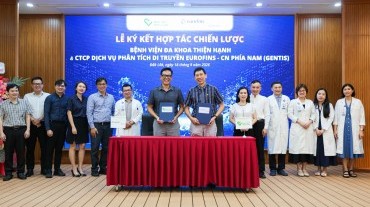
Representing Eurofins GENTIS were MSc., Resident Physician in Genetics Vu Thu Huong and MSc. Nguyen Van Huynh – Research & Development (R&D) Center.
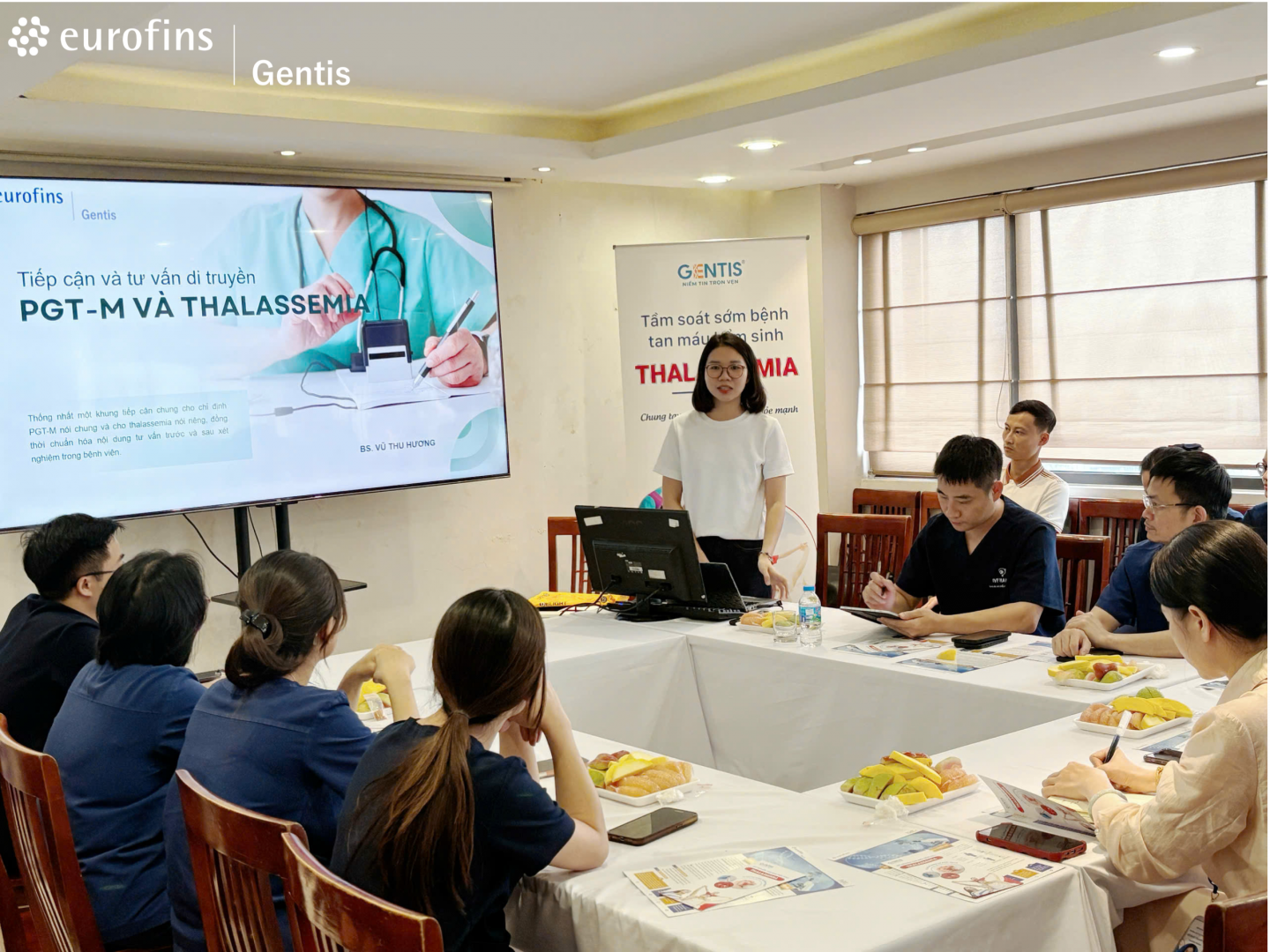
Representing Hanoi General Hospital were MSc., MD Nguyen Duy Phuong – Director of the Center for Infertility and Gender Medicine; MSc., MD Nguyen Thi Thu – Deputy Director of the Center for Infertility and Gender Medicine; MSc., MD Nguyen Tien Phong – Specialist in Assisted Reproduction and Andrology; Specialist Level II Physician Truong Van Phi – Head of the Andrology & Gender Medicine Unit; together with doctors and healthcare professionals of the hospital.
During the scientific session, the experts focused on approaches to and genetic counseling for:
PGT-M for Families at Risk of Having a Child with a Monogenic Disorder
PGT-M (Preimplantation Genetic Testing for Monogenic Disorders) is a genetic test performed on embryos before embryo transfer to support the selection of embryos that do not carry the disease-causing variant identified in the family.
Consideration of PGT-M should be based on an individualized assessment of each case. In principle, PGT-M may be considered when the following factors are met:
- The disease-causing variant has been clearly identified;
- The variant has established clinical significance;
- The test can be technically developed and performed;
- The approach is consistent with the family's needs and preferences following genetic counseling.
Therefore, genetic counseling and accurate identification of the disease-causing variant before PGT-M are important, providing physicians and families with a basis for assessing genetic risks and considering appropriate reproductive options.
Thalassemia and the Role of Genotype Determination
Thalassemia is a group of inherited disorders caused by reduced or absent production of one or more globin chains that make up hemoglobin. An imbalance between globin chains can result in anemia of varying severity, depending on the type and number of affected alleles, as well as the characteristics of the genetic variants involved.
For couples at risk of having a child affected by Thalassemia, accurately determining the genotype of both partners is an important basis for assessing the risk of transmission to their children. Molecular testing can identify relevant genetic variants, thereby supporting physicians in providing reproductive risk counseling and considering appropriate options.
PGT-M Is an Option, Not an Indication for Every Case
Through the discussion, the experts agreed that not every individual or couple carrying Thalassemia-related genetic variants has an indication for PGT-M. The decision to undergo PGT-M should be based on the family's specific genetic characteristics, the risk of having an affected child, the technical feasibility of the test, and the couple's preferences following comprehensive genetic counseling.
PGT-M may be a reproductive option for families at high risk of having a child affected by a monogenic disorder. However, even after PGT-M has been performed and an appropriate embryo has been selected for transfer, once pregnancy is established, the family should still receive counseling regarding prenatal diagnosis and consider appropriate methods to confirm the genetic status of the fetus.
Strengthening Professional Collaboration in Support of Precision Medicine
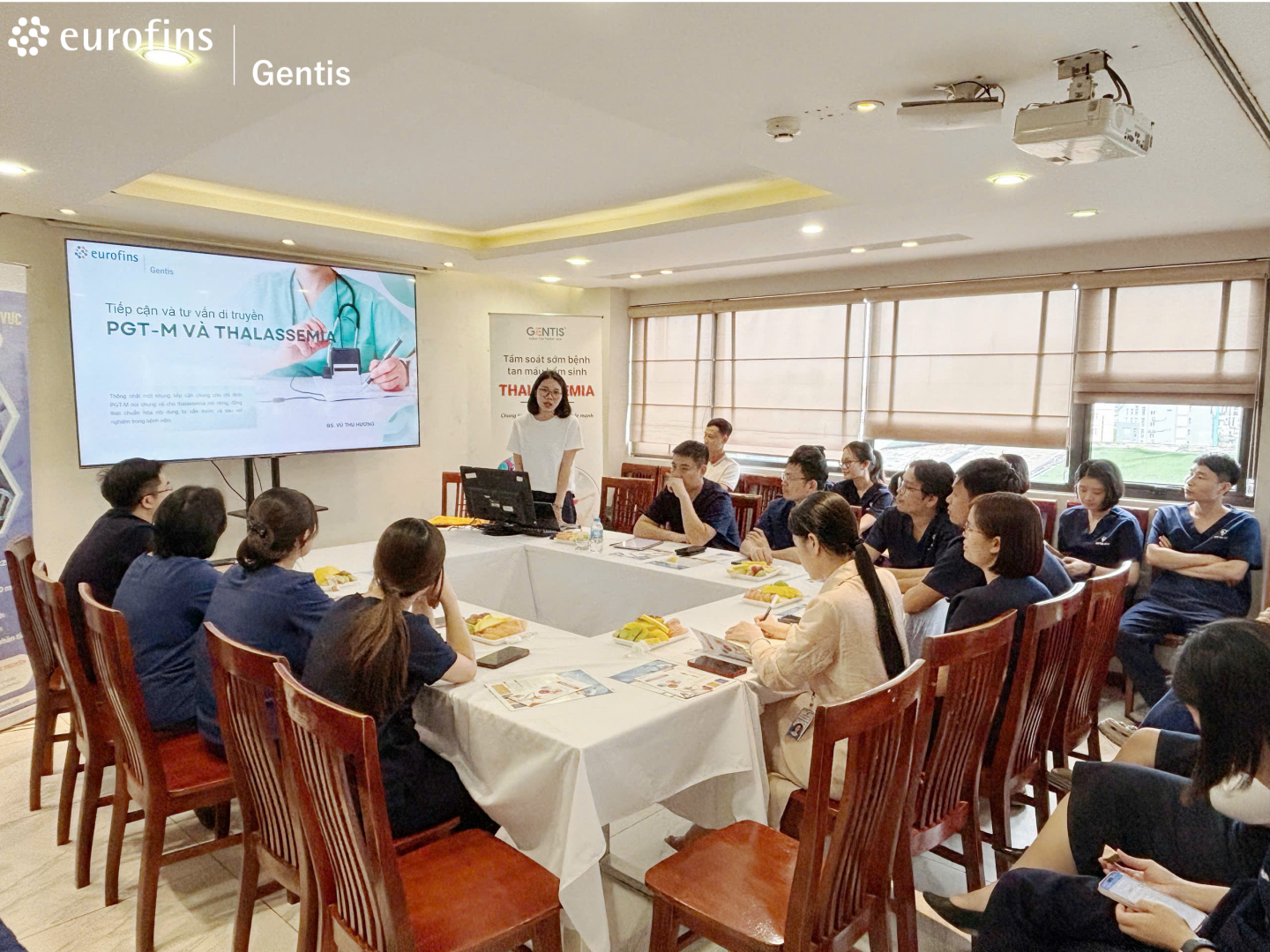
The scientific session between Eurofins GENTIS and Hanoi General Hospital not only contributed to updating knowledge on PGT-M and Thalassemia but also provided an opportunity for practical knowledge and experience to be exchanged between genetic testing professionals and clinical specialists.
Through professional exchange activities, Eurofins GENTIS continues to strengthen collaboration with healthcare institutions, aiming to connect genetic testing capabilities with clinical practice and contribute to supporting physicians in counseling and managing patients and families at risk of genetic disorders in reproductive healthcare.
Eurofins GENTIS sincerely thanks the Hospital's Leadership Board, doctors, and healthcare professionals of Hanoi General Hospital for their collaboration and participation in the program. This scientific exchange provides a foundation for the two organizations to further expand professional collaboration, share knowledge, and stay updated on advances in genetics and assisted reproduction.







Để lại bình luận
0 Bình luận