

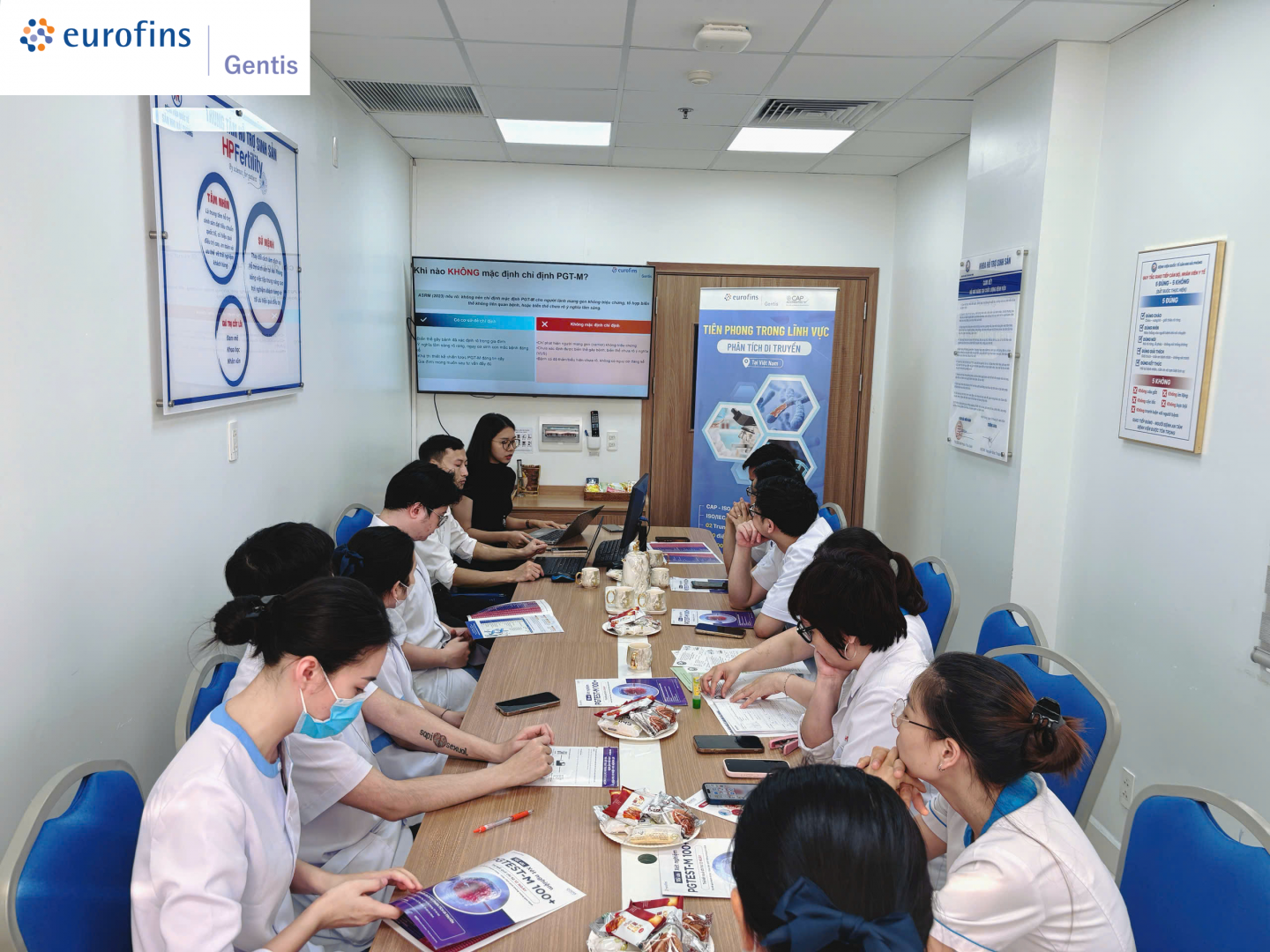
Representing Eurofins GENTIS were MSc. Nguyen Van Huynh – Research & Development (R&D) Center and MSc., Resident Physician in Genetics Vu Thu Huong. Representing Hai Phong International Obstetrics and Pediatrics Hospital was Specialist Level I Physician Nguyen Duc Thuan – Head of the Department of Assisted Reproduction, together with doctors and healthcare professionals of the hospital.
Updates on PGT-M in Assisted Reproduction
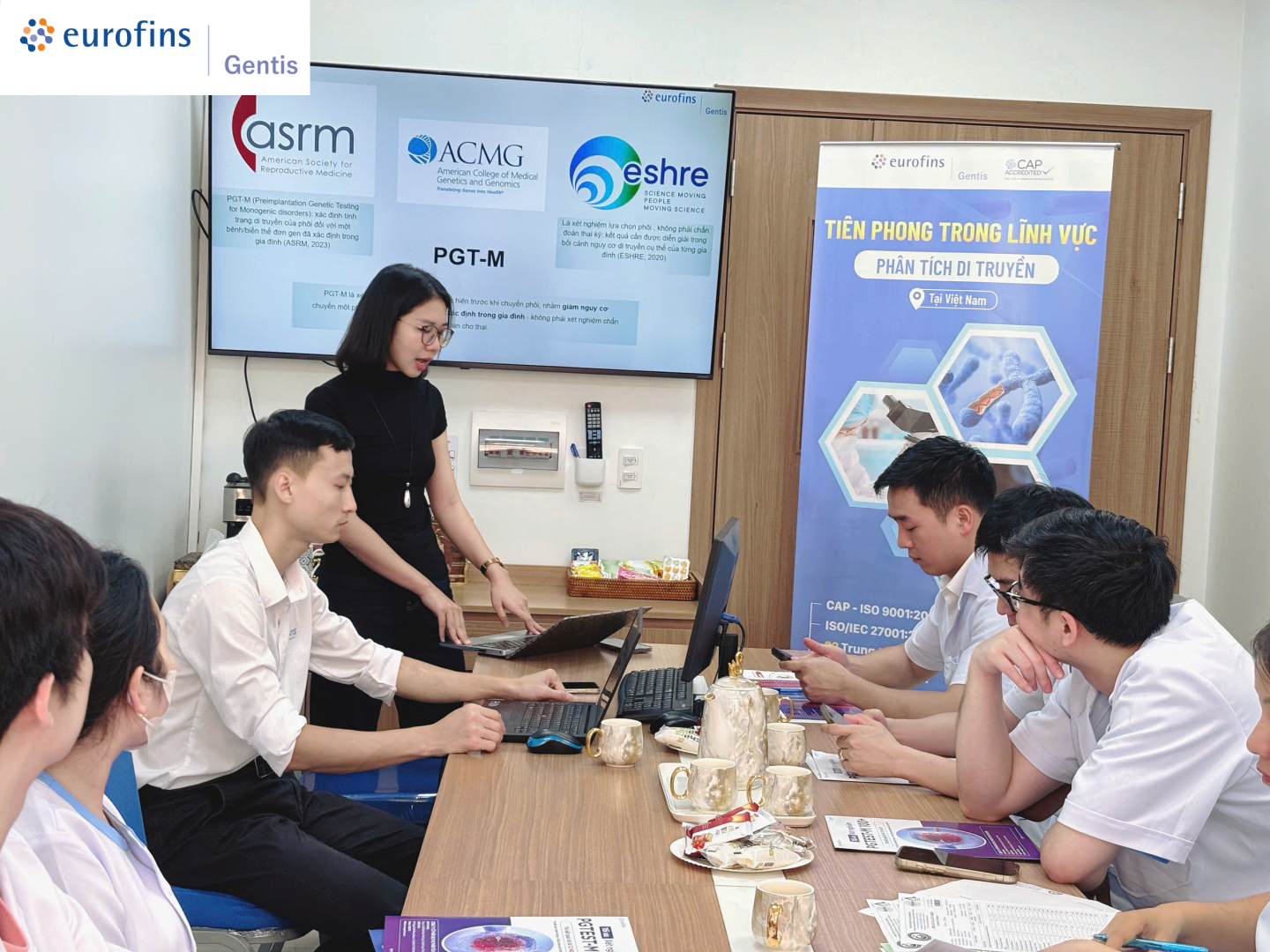
During the session, the experts discussed the role of PGT-M (Preimplantation Genetic Testing for Monogenic Diseases), a preimplantation genetic testing method for monogenic disorders. PGT-M is performed on embryos before embryo transfer to support embryo selection based on genetic status for a specific monogenic disease identified in the family.
The consideration of PGT-M should be based on an individualized assessment of the family's genetic condition and the feasibility of performing the test. Four key factors discussed included: the disease-causing variant has been clearly identified; the variant has established clinical significance; the test is technically feasible; and the approach is consistent with the family's preferences following genetic counseling.
Therefore, PGT-M is not an indication applicable to every case at risk of a genetic disorder and should be considered on an individual basis.
Thalassemia and the Role of Genotype Determination in Genetic Counseling
Another key topic of the scientific session was Thalassemia, an inherited blood disorder caused by reduced or absent production of one type of globin chain, resulting in an imbalance between globin chains and anemia of varying severity.
For couples at risk, accurately determining the genotype of both partners is important for assessing the risk of genetic transmission to their children and providing counseling on appropriate reproductive options.
The experts emphasized that not every case of Thalassemia carrier status has an indication for PGT-M. Molecular testing can be used to determine the genotype, providing a basis for reproductive risk counseling and assessment of the feasibility of PGT-M when appropriate.
PGT-M is a reproductive option for families at increased risk and is not a mandatory test. After PGT-M has been performed and pregnancy is established, the family should still receive appropriate counseling and undergo suitable genetic monitoring during pregnancy to assess the genetic status of the fetus.
Carrier Screening for 28 Genes Associated with 25 Rare Recessive Genetic Diseases and Syndromes
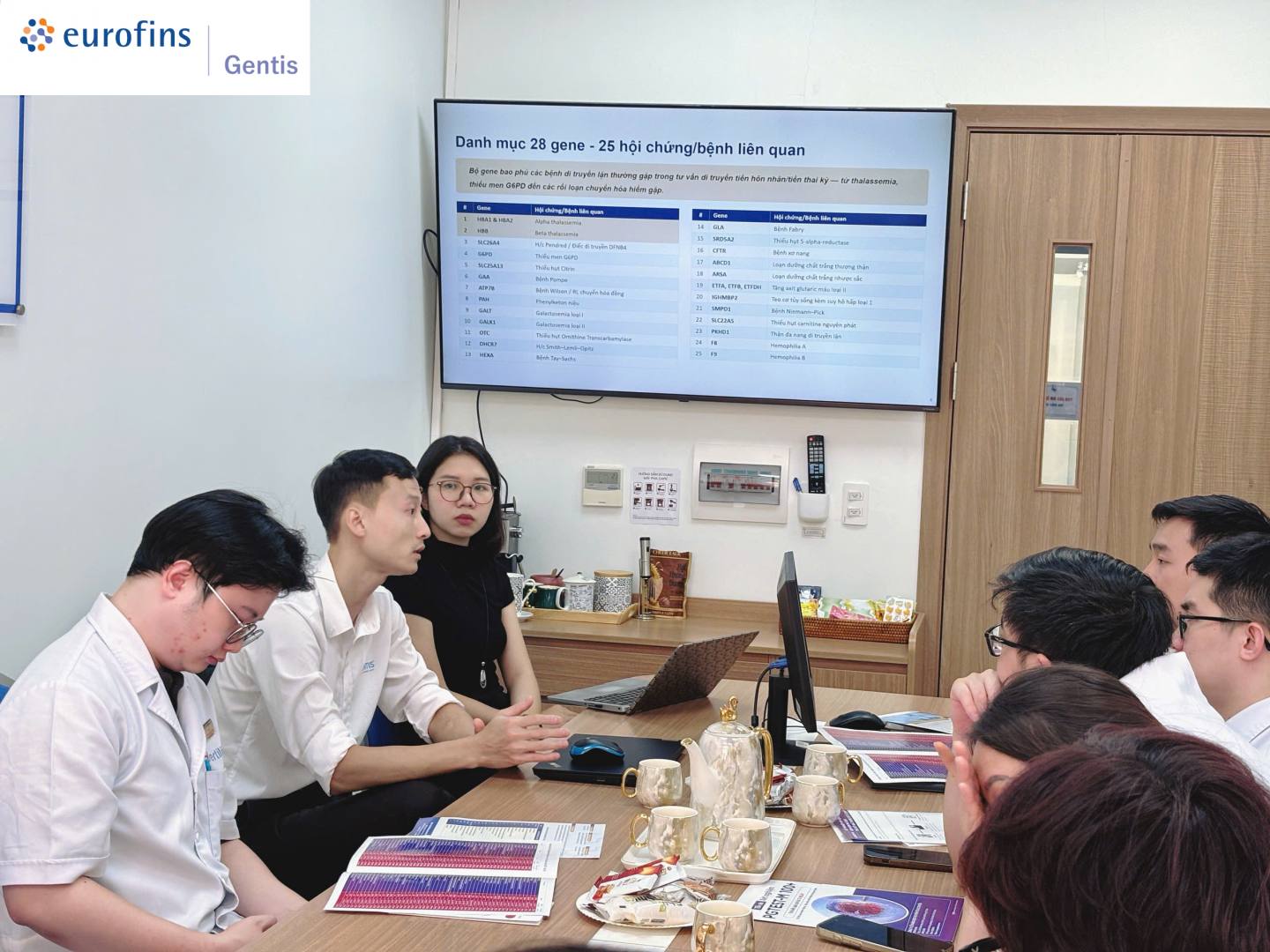
In addition to PGT-M and Thalassemia, the program also provided updates on a genetic test analyzing 28 genes associated with 25 rare recessive genetic diseases and syndromes, intended for carrier screening before pregnancy or before undergoing IVF.
The test may be considered for:
- Couples preparing to undergo IVF;
- Couples with a family history of recessive genetic disorders;
- Couples seeking expanded carrier screening before pregnancy.
Notably, the test panel includes genes associated with Thalassemia, including HBA1, HBA2, and HBB. According to the professional discussion during the session, the diseases and syndromes covered by the gene panel have corresponding PGT-M approaches.
When both partners carry a disease-causing variant in the same gene, or when the mother carries a disease-causing variant associated with X-linked inheritance in appropriate cases, the screening results may provide a basis for further risk assessment and consideration of PGT-M following genetic counseling.
Scientific Session: Eurofins GENTIS Provides Updates on PGT-M, Thalassemia and 28-Gene Carrier Screening at Hai Phong International Obstetrics and Pediatrics Hospital
Publication date: 19 September 2026
Last updated: 11 September 2026
Author: Eurofins GENTIS
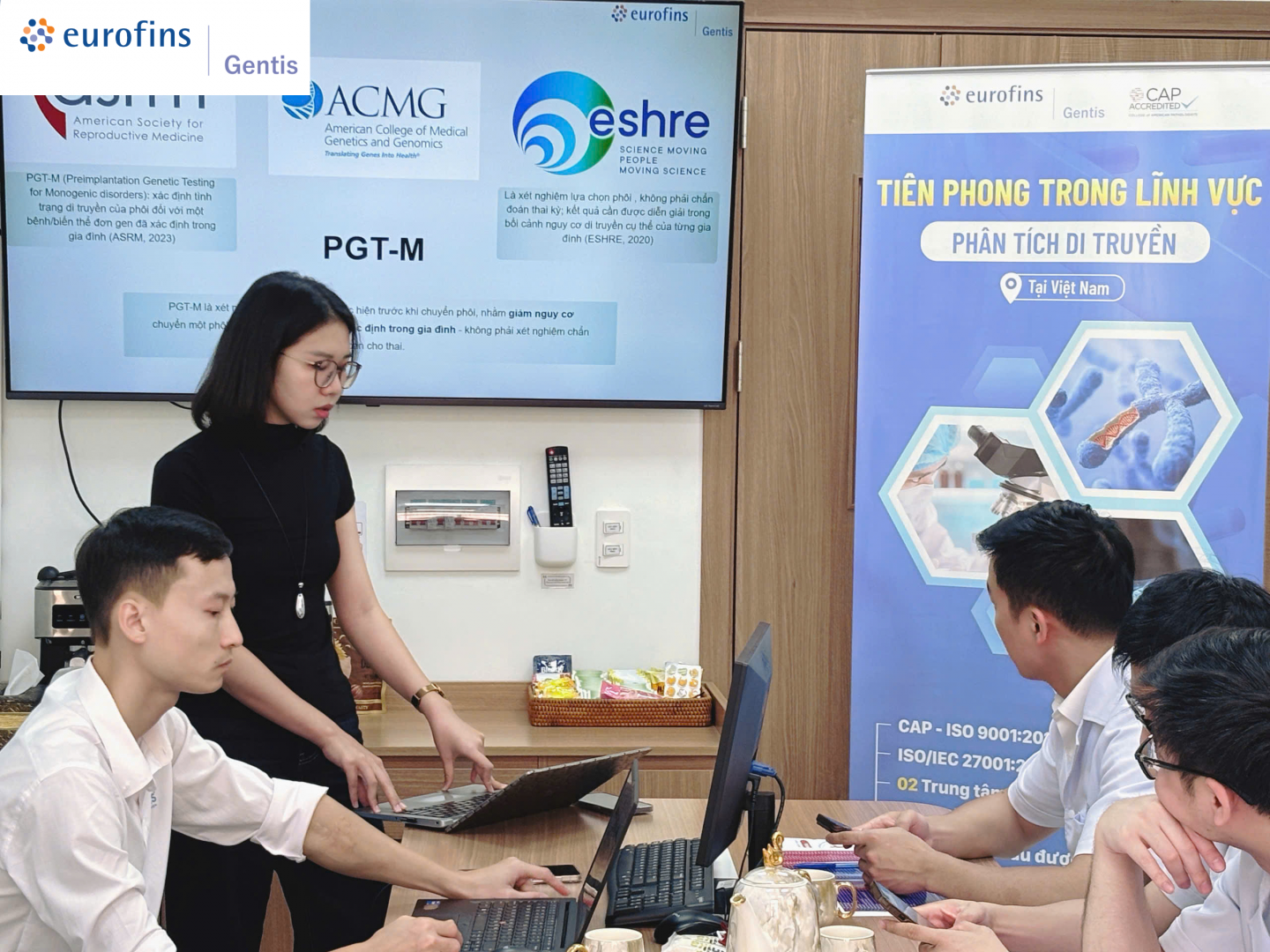
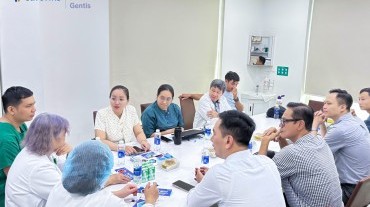
On the afternoon of 10 September 2026, Eurofins GENTIS, in collaboration with Hai Phong International Obstetrics and Pediatrics Hospital, organized a scientific session covering two topics: “Approaches to and Genetic Counseling for PGT-M and Thalassemia” and “28-Gene Carrier Screening for Couples Preparing for IVF.” The program provided an opportunity for the professional teams of both organizations to update their knowledge, enhance genetic risk assessment and counseling in assisted reproduction, and exchange practical experience in clinical examination and treatment.
Representing Eurofins GENTIS were MSc. Nguyen Van Huynh – Research & Development (R&D) Center and MSc., Resident Physician in Genetics Vu Thu Huong. Representing Hai Phong International Obstetrics and Pediatrics Hospital was Specialist Level I Physician Nguyen Duc Thuan – Head of the Department of Assisted Reproduction, together with doctors and healthcare professionals of the hospital.
Updates on PGT-M in Assisted Reproduction
During the session, the experts discussed the role of PGT-M (Preimplantation Genetic Testing for Monogenic Diseases), a preimplantation genetic testing method for monogenic disorders. PGT-M is performed on embryos before embryo transfer to support embryo selection based on genetic status for a specific monogenic disease identified in the family.
The consideration of PGT-M should be based on an individualized assessment of the family's genetic condition and the feasibility of performing the test. Four key factors discussed included: the disease-causing variant has been clearly identified; the variant has established clinical significance; the test is technically feasible; and the approach is consistent with the family's preferences following genetic counseling.
Therefore, PGT-M is not an indication applicable to every case at risk of a genetic disorder and should be considered on an individual basis.
Thalassemia and the Role of Genotype Determination in Genetic Counseling
Another key topic of the scientific session was Thalassemia, an inherited blood disorder caused by reduced or absent production of one type of globin chain, resulting in an imbalance between globin chains and anemia of varying severity.
For couples at risk, accurately determining the genotype of both partners is important for assessing the risk of genetic transmission to their children and providing counseling on appropriate reproductive options.
The experts emphasized that not every case of Thalassemia carrier status has an indication for PGT-M. Molecular testing can be used to determine the genotype, providing a basis for reproductive risk counseling and assessment of the feasibility of PGT-M when appropriate.
PGT-M is a reproductive option for families at increased risk and is not a mandatory test. After PGT-M has been performed and pregnancy is established, the family should still receive appropriate counseling and undergo suitable genetic monitoring during pregnancy to assess the genetic status of the fetus.
Carrier Screening for 28 Genes Associated with 25 Rare Recessive Genetic Diseases and Syndromes
In addition to PGT-M and Thalassemia, the program also provided updates on a genetic test analyzing 28 genes associated with 25 rare recessive genetic diseases and syndromes, intended for carrier screening before pregnancy or before undergoing IVF.
The test may be considered for:
- Couples preparing to undergo IVF;
- Couples with a family history of recessive genetic disorders;
- Couples seeking expanded carrier screening before pregnancy.
Notably, the test panel includes genes associated with Thalassemia, including HBA1, HBA2, and HBB. According to the professional discussion during the session, the diseases and syndromes covered by the gene panel have corresponding PGT-M approaches.
When both partners carry a disease-causing variant in the same gene, or when the mother carries a disease-causing variant associated with X-linked inheritance in appropriate cases, the screening results may provide a basis for further risk assessment and consideration of PGT-M following genetic counseling.
Strengthening Professional Exchange to Enhance Genetic Counseling
Through the scientific session, the professional teams of Eurofins GENTIS and Hai Phong International Obstetrics and Pediatrics Hospital had an opportunity to exchange knowledge, discuss practical issues, and update their understanding of approaches to genetic testing, particularly for cases at risk of monogenic disorders and Thalassemia.
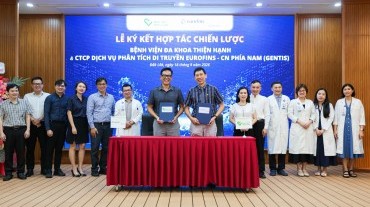
The activity also contributed to strengthening professional collaboration between the two organizations, providing a foundation for continued cooperation, professional exchange, and updates on genetic testing solutions in assisted reproduction. These efforts aim to support physicians and families with additional scientific information during the counseling process and when considering appropriate reproductive options.








Để lại bình luận
0 Bình luận